PAS #31 · Drag rudiments
Drag
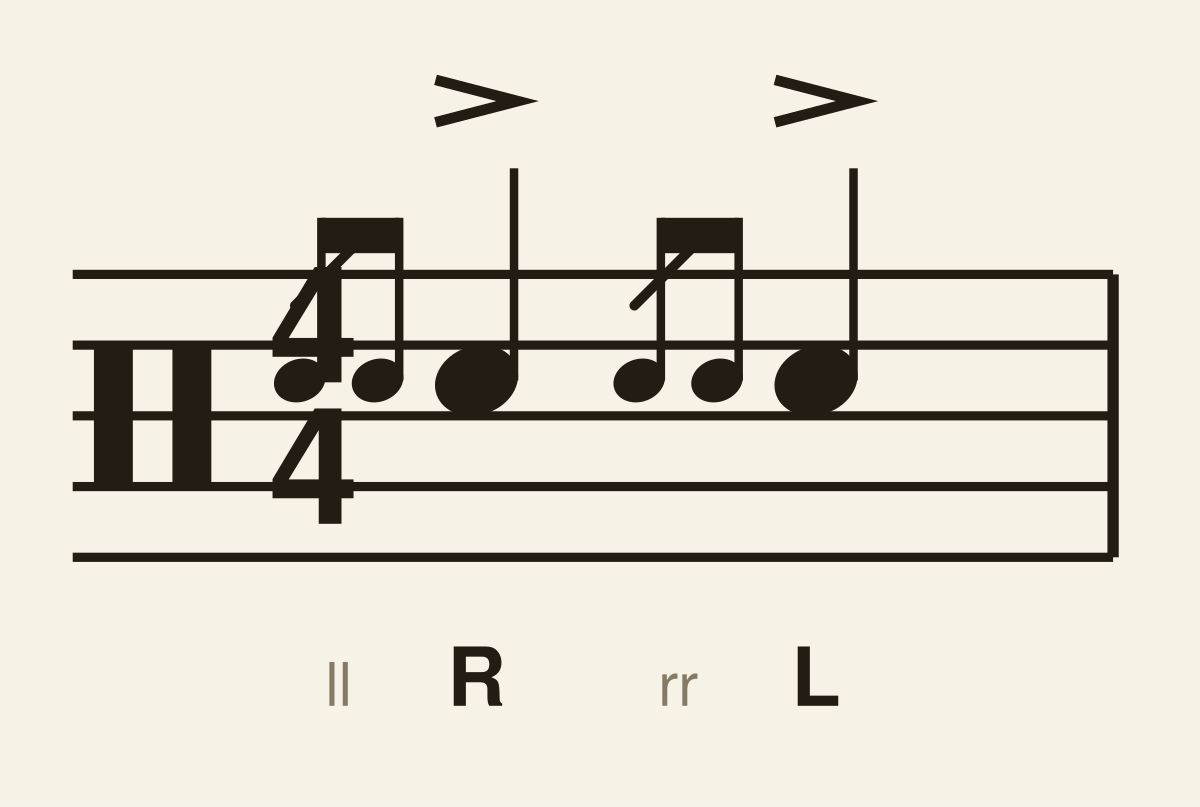
2 main strokes, 4 grace notes over 2 beats. Read it, hear it, and slow it down until it is even.
llR rrL
Capital letters are full strokes; small letters are the quiet grace notes of a flam or drag.
What the drag is
Two quiet grace notes from one hand immediately before a main stroke from the other — a flam with an extra grace note, also called a half drag or a ruff. The two grace notes are a double stroke played very close and very low, so they crush into the main note instead of sounding as separate sixteenths. It is the gateway to the whole drag family, and getting the two graces even is what makes every ratamacue afterwards possible.
How to practise it
- The two grace notes are one very low, very fast double stroke — not two separate taps. Keep the stick within an inch of the head.
- They should crush into the main note. If you can count them as sixteenths they are too slow and too loud.
- Play the main stroke exactly on the beat and let the graces fall before it. Beginners put the first grace note on the beat, which makes everything late.
- Alternate: drag into a right-hand stroke, then into a left-hand stroke, and keep both sides identical.
Where it leads
The drag belongs to the drag rudiments family, and it feeds directly into the single and double drag taps, Lesson 25, the drag paradiddles and all three ratamacues. Get it even at a slow tempo before you move on — every rudiment built on top of it inherits whatever unevenness you leave here.
Reading the notation above
Both hands play the snare drum, so every notehead sits in the third space of the staff and the sticking letters underneath tell you which hand plays which note. Capital letters are full strokes; small letters are grace notes. The small noteheads with a slash through the stem are the grace notes of the ornament — they are played almost simultaneously with the note that follows, not as separate beats. The marks above the staff are accents: hit those notes harder. Full details in the drum notation guide.
Rudiment data last updated . Every diagram here, in the printable PDF and in the chart image comes from one dataset, so the paper and the screen cannot disagree.