40 PAS rudiments · 12 interactive lessons
Drum Rudiments
The complete 40-rudiment chart, plus 12 full lessons with notation, sticking and loopable audio you can slow right down.
What are drum rudiments?
Drum rudiments are short, fixed sticking patterns — set sequences of right- and left-hand strokes — that drummers practise to build speed, evenness and independence between the hands. They are drumming’s vocabulary: rolls, diddles, flams and drags combine into fills, grooves and solos the way scales and arpeggios combine into melodies.
The standard list is maintained by the Percussive Arts Society and contains 40 rudiments in four families. Rolls sustain sound by repeating strokes; diddles mix singles with doubles to move the leading hand around; flams thicken a note with one grace stroke; drags do it with two. Every one of them is practised on a single snare drum before it goes anywhere near the kit.
Start with these 12
Each of these has a full lesson: standard notation with the sticking written underneath, slow and full-speed playback, a tempo slider and practice notes. Single paradiddle and flam first — they are the two most people come looking for.
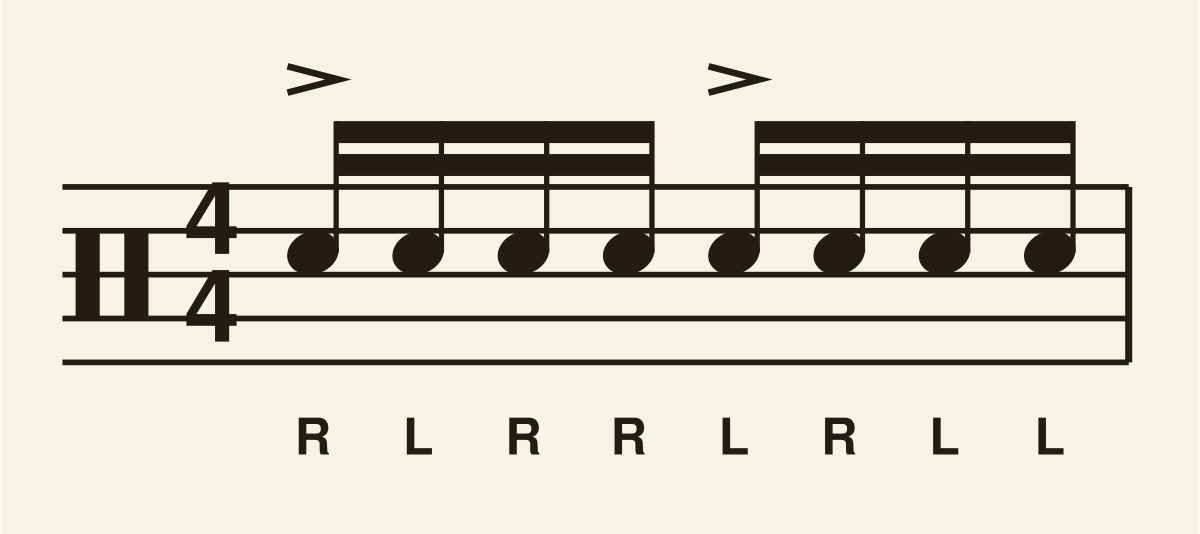
Single Paradiddle
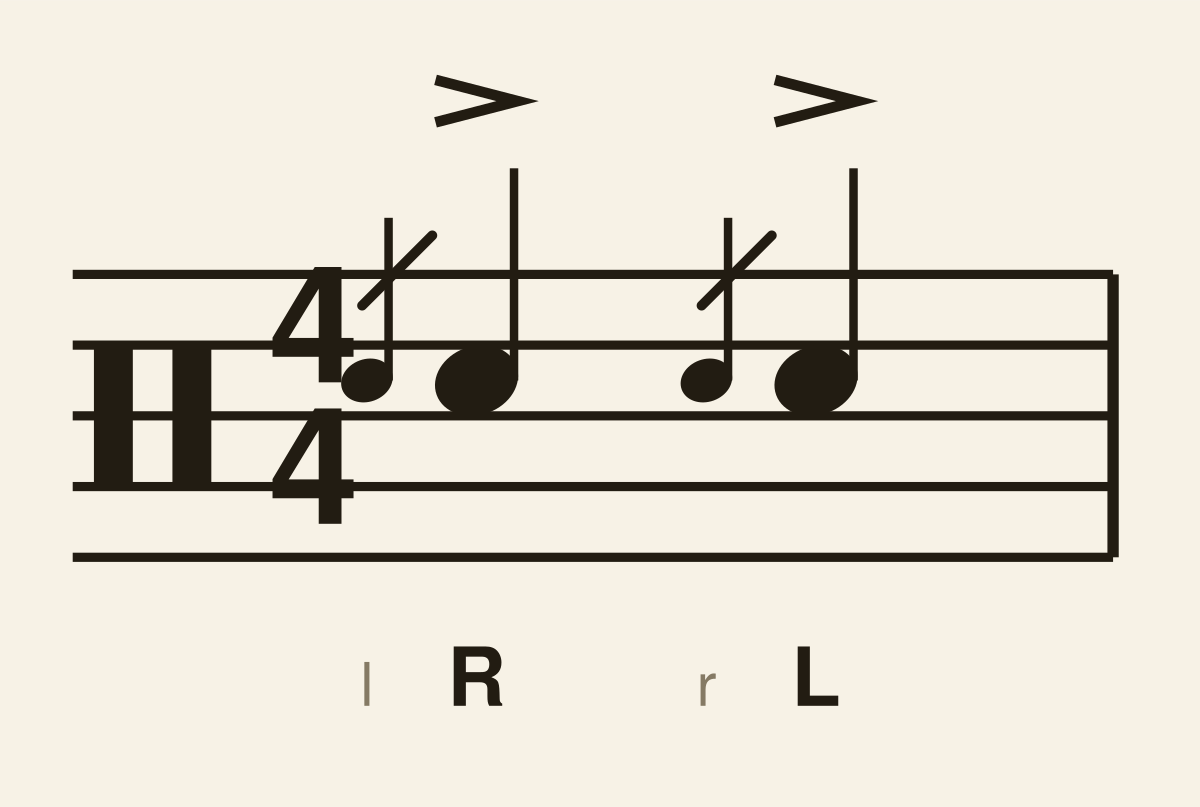
RLRR LRLLFlam
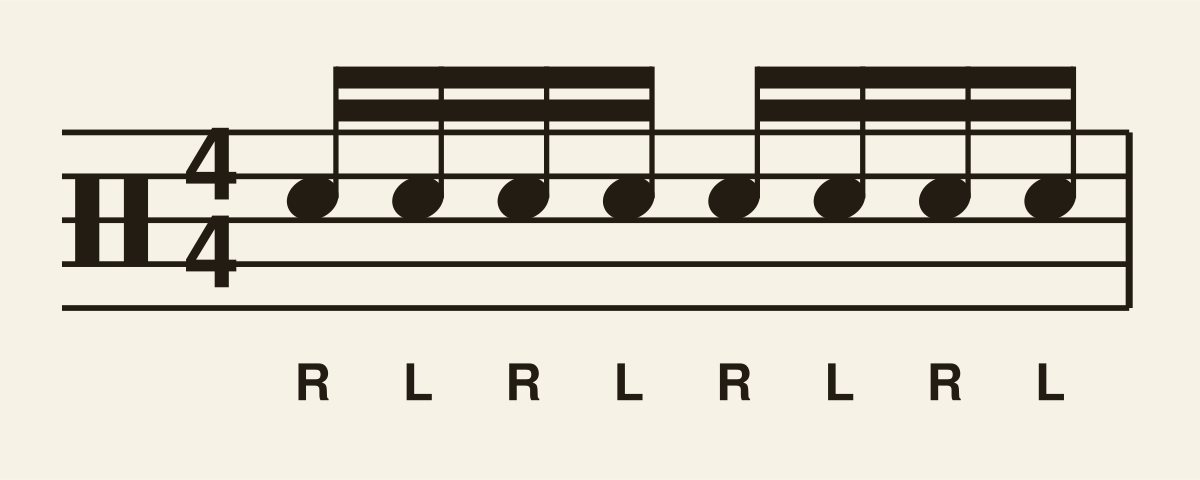
lR rLSingle Stroke Roll
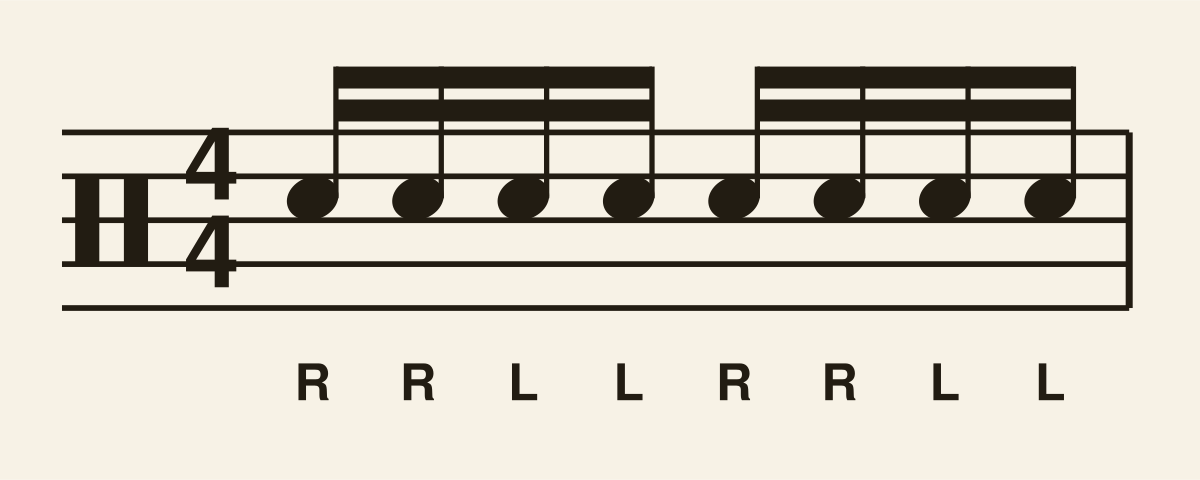
RLRL RLRLDouble Stroke Open Roll
RR LL RR LLFive Stroke Roll
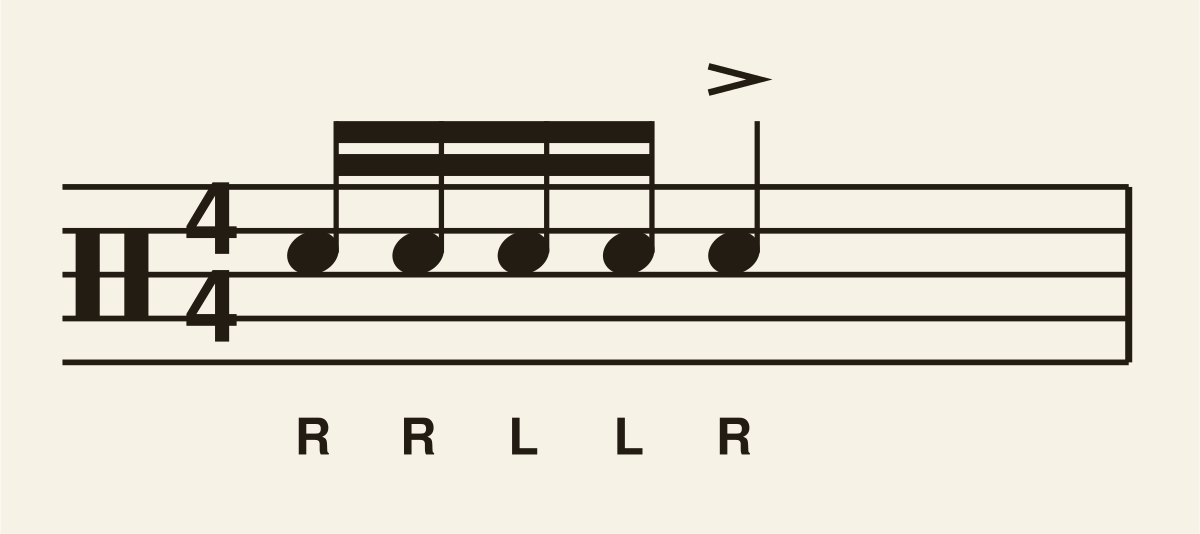
RR LL RNine Stroke Roll
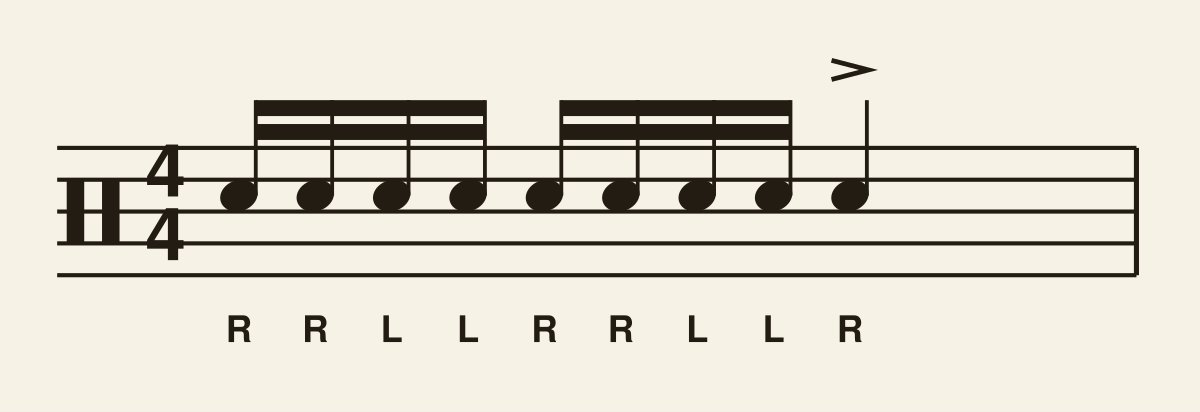
RR LL RR LL RDouble Paradiddle
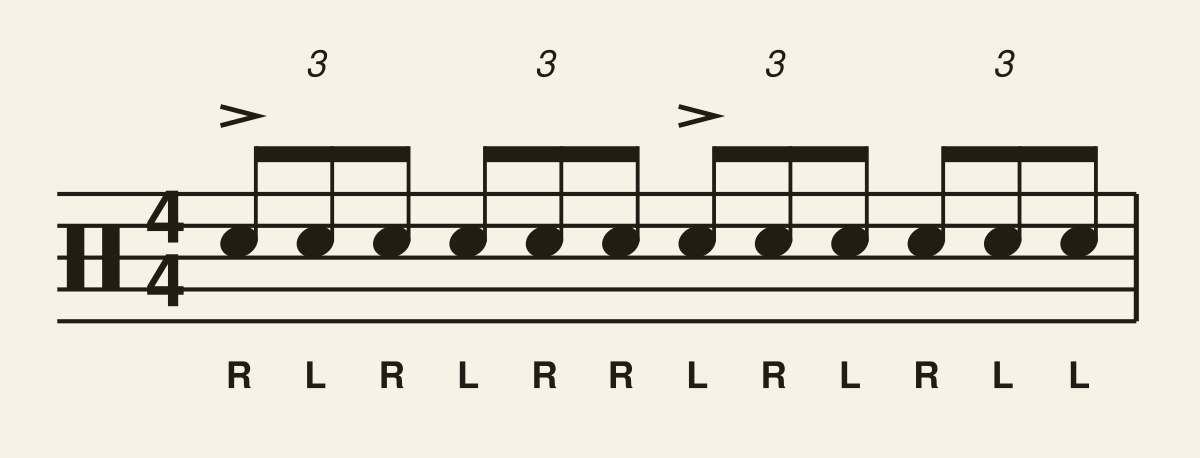
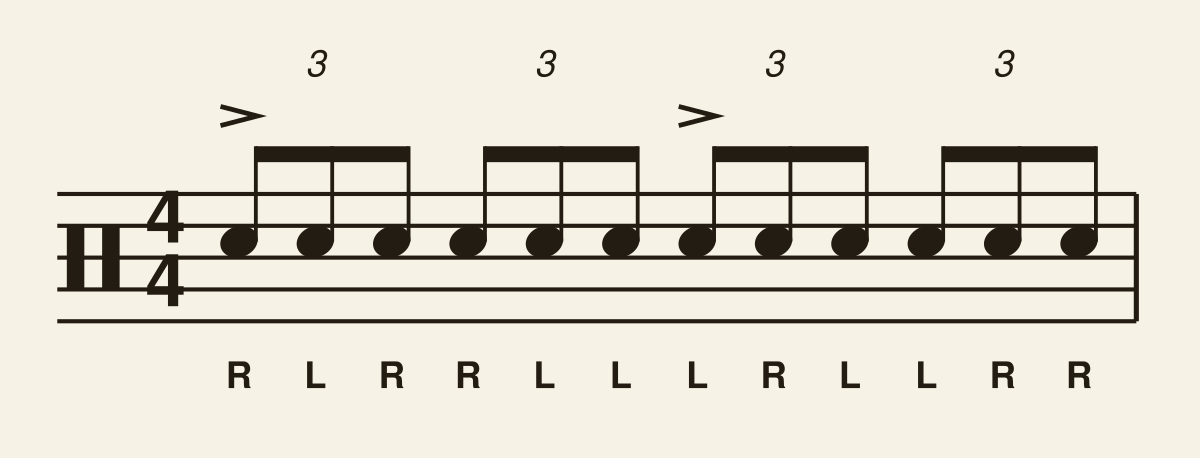
RLRLRR LRLRLLSingle Paradiddle-Diddle
RLRRLL LRLLRRFlam Tap
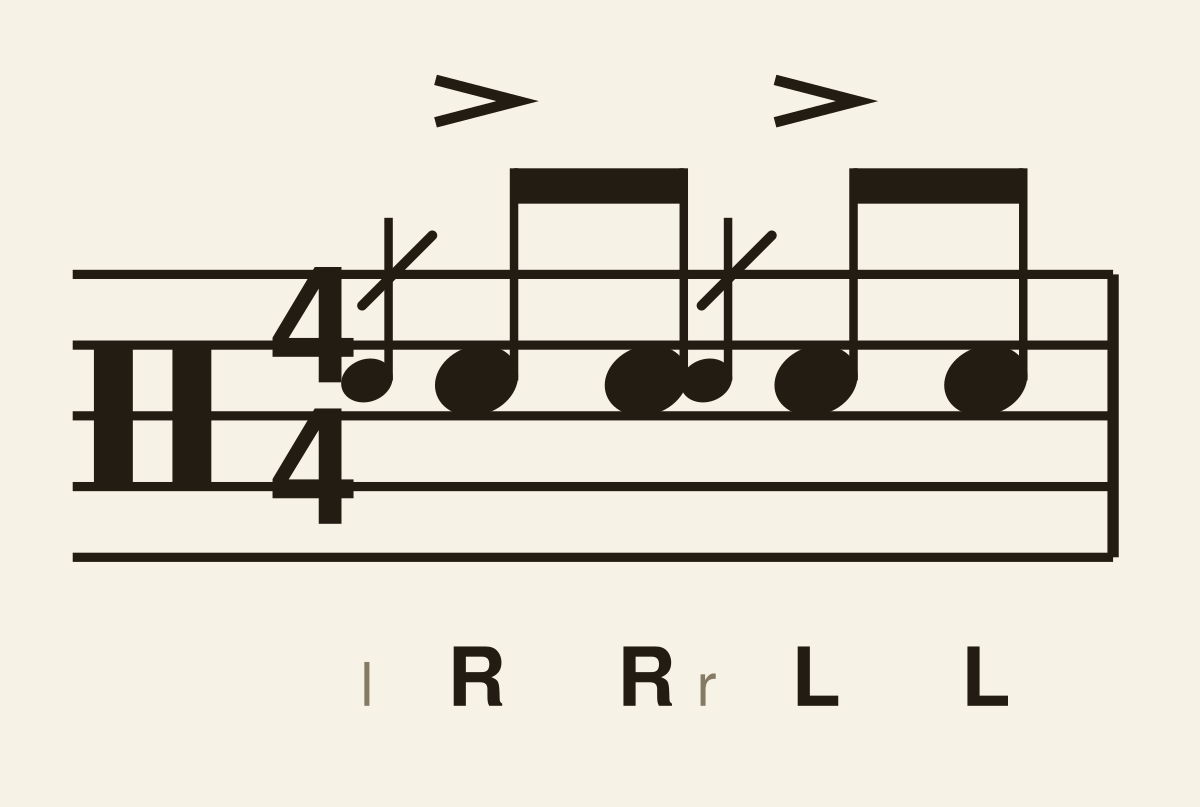
lRR rLLFlam Accent
lR L R rL R LDrag
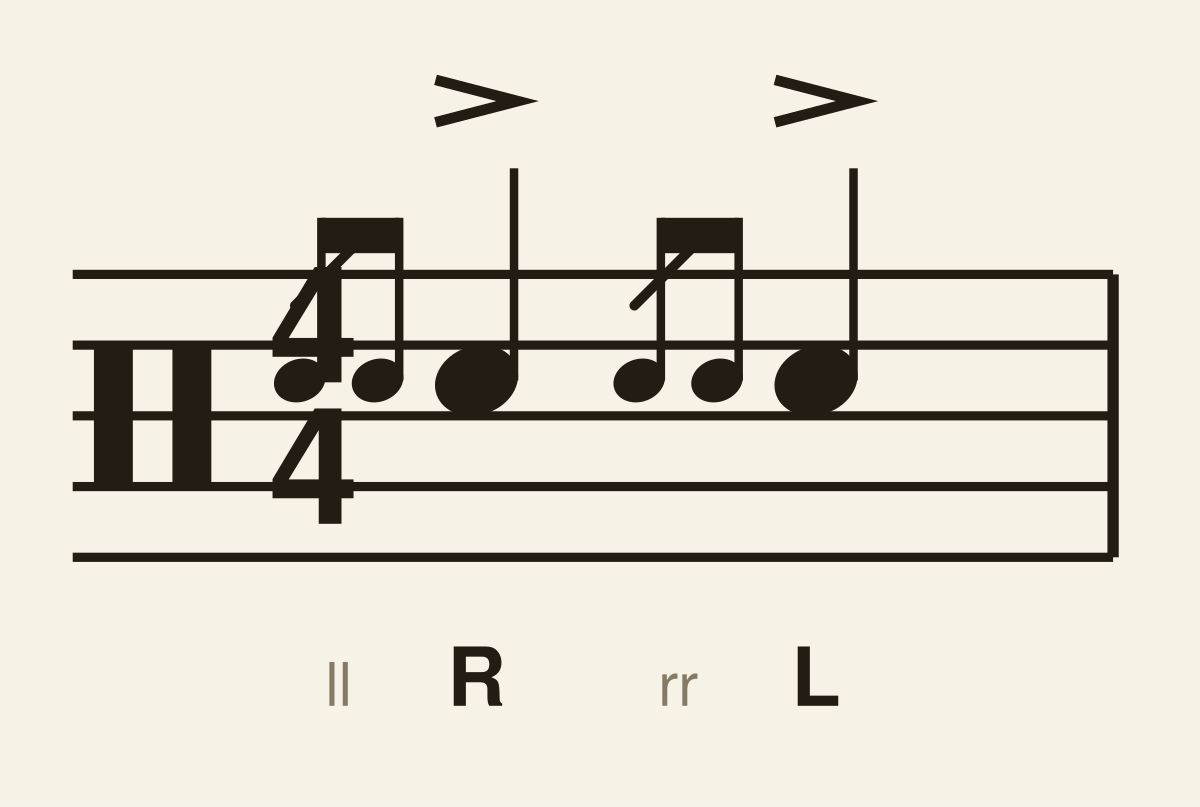
llR rrLSingle Drag Tap
llR L rrL R
The 40 essential rudiments
The full Percussive Arts Society list in official order. Capital letters are full strokes; small letters are the quiet grace notes of a flam (lR) or a drag (llR). Every rudiment is also practised leading with the other hand.
| # | Rudiment | Family | Sticking |
|---|---|---|---|
| 1 | Single Stroke Roll | Roll | RLRL RLRL |
| 2 | Single Stroke Four | Roll | RLRL |
| 3 | Single Stroke Seven | Roll | RLRLRLR |
| 4 | Multiple Bounce Roll | Roll | RLRL |
| 5 | Triple Stroke Roll | Roll | RRR LLL RRR LLL |
| 6 | Double Stroke Open Roll | Roll | RR LL RR LL |
| 7 | Five Stroke Roll | Roll | RR LL R |
| 8 | Six Stroke Roll | Roll | R LL RR L |
| 9 | Seven Stroke Roll | Roll | RR LL RR L |
| 10 | Nine Stroke Roll | Roll | RR LL RR LL R |
| 11 | Ten Stroke Roll | Roll | RR LL RR LL R L |
| 12 | Eleven Stroke Roll | Roll | RR LL RR LL RR L |
| 13 | Thirteen Stroke Roll | Roll | RR LL RR LL RR LL R |
| 14 | Fifteen Stroke Roll | Roll | RR LL RR LL RR LL RR L |
| 15 | Seventeen Stroke Roll | Roll | RR LL RR LL RR LL RR LL R |
| 16 | Single Paradiddle | Diddle | RLRR LRLL |
| 17 | Double Paradiddle | Diddle | RLRLRR LRLRLL |
| 18 | Triple Paradiddle | Diddle | RLRLRLRR LRLRLRLL |
| 19 | Single Paradiddle-Diddle | Diddle | RLRRLL LRLLRR |
| 20 | Flam | Flam | lR rL |
| 21 | Flam Accent | Flam | lR L R rL R L |
| 22 | Flam Tap | Flam | lRR rLL |
| 23 | Flamacue | Flam | lR L R L lR |
| 24 | Flam Paradiddle | Flam | lRLRR rLRLL |
| 25 | Single Flammed Mill | Flam | lRRLR rLLRL |
| 26 | Flam Paradiddle-Diddle | Flam | lRLRRLL rLRLLRR |
| 27 | Pataflafla | Flam | lRLR rL |
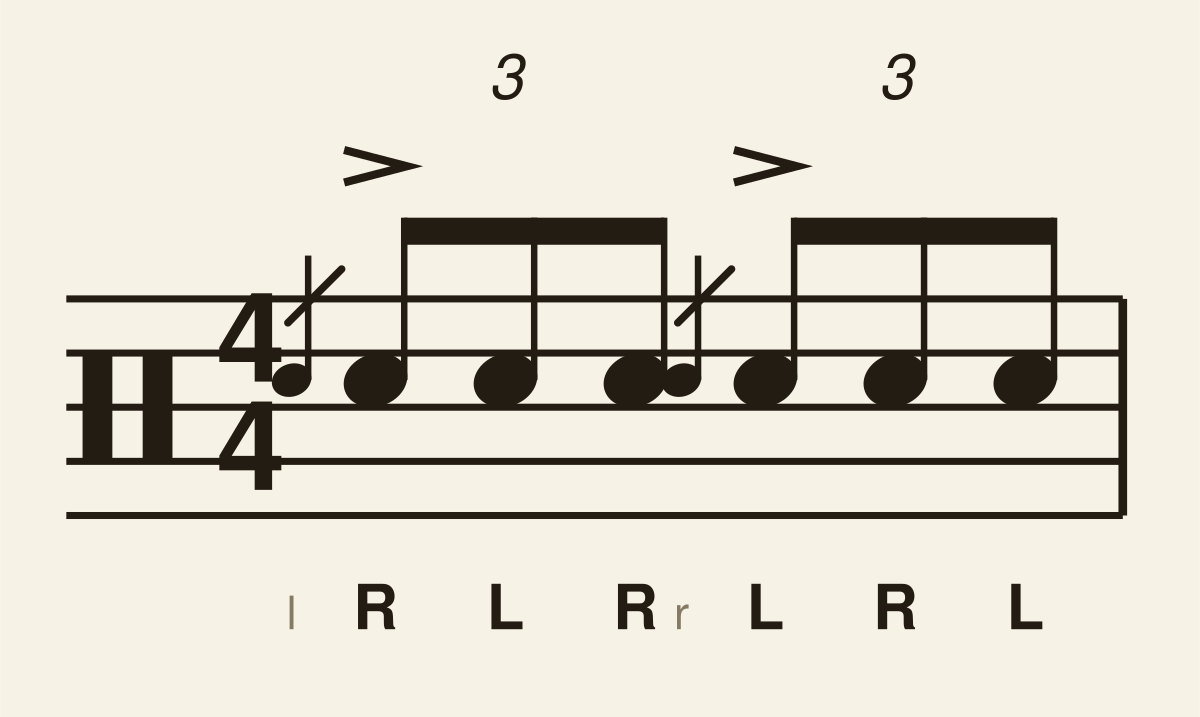
| 28 | Swiss Army Triplet | Flam | lRRL rLLR |
| 29 | Inverted Flam Tap | Flam | R lR L rL |
| 30 | Flam Drag | Flam | lR rrL R rL llR L |
| 31 | Drag | Drag | llR rrL |
| 32 | Single Drag Tap | Drag | llR L rrL R |
| 33 | Double Drag Tap | Drag | llR llR L rrL rrL R |
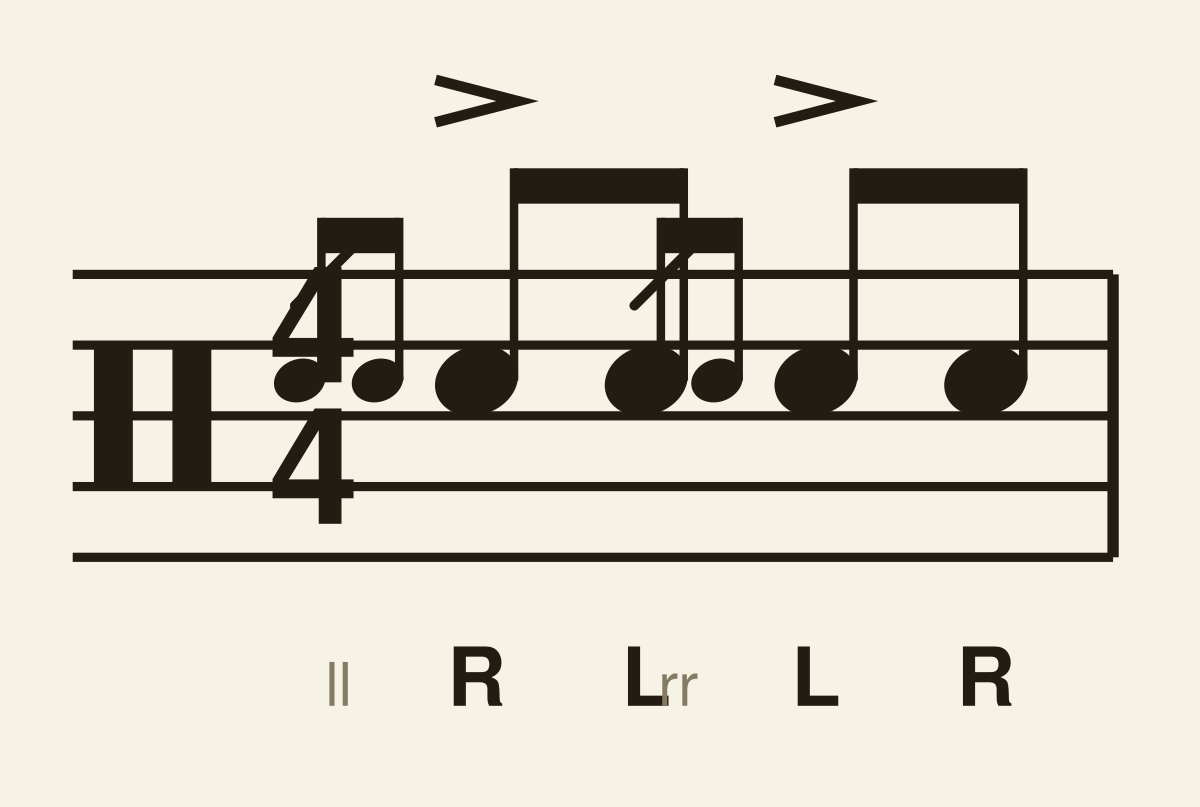
| 34 | Lesson 25 | Drag | llR L R rrL R L |
| 35 | Single Dragadiddle | Drag | RRLR LLRL |
| 36 | Drag Paradiddle #1 | Drag | R llRLRR L rrLRLL |
| 37 | Drag Paradiddle #2 | Drag | R R llRLRR L L rrLRLL |
| 38 | Single Ratamacue | Drag | llR L R L |
| 39 | Double Ratamacue | Drag | llR rrL R L R |
| 40 | Triple Ratamacue | Drag | llR rrL llR L R L |
How many drum rudiments are there?
There are 40 official drum rudiments on the Percussive Arts Society International Drum Rudiments list: 15 roll rudiments, 4 diddle rudiments, 11 flam rudiments and 10 drag rudiments.
Older sources sometimes say 26 — that is the earlier N.A.R.D. list, which PAS absorbed and extended in 1984 with drum-corps, orchestral and European rudiments. You will also meet hybrid rudiments: hundreds of unofficial combinations with names like the cheese inverta or the blackadiddle. They are real and widely played, but they are not part of the official 40, and none of them will teach you anything the standard list does not cover first.
How to practise a rudiment
- Start absurdly slowly. Slow enough that you can see each stroke land. Every lesson page here has a Slow button set to 60% of the working tempo for exactly this.
- Match your hands before you add speed. Record ten seconds and listen: if one hand is quieter or later, speed will only entrench it.
- Lead with the other hand too. Every rudiment on this list should be playable starting left. Most drummers skip this and end up with one usable hand.
- Use a click, always. Rudiments are timing exercises as much as hand exercises. The rhythm trainer gives you a metronome with a visual pulse.
- Move it to the kit. Once a rudiment is even, split it between snare and toms, or put the right hand on the hi-hat — that is how a rudiment becomes a fill.
Printable rudiments chart (PDF)
All 40 rudiments on one page with names, families and sticking, generated from the same data as the table above. Letter and A4, no email address required — tape it above your practice pad.
Frequently asked questions
What are drum rudiments?
Drum rudiments are short, fixed sticking patterns — set sequences of right- and left-hand strokes — that drummers practise to build speed, evenness and independence between the hands. They are the vocabulary of drumming: rolls, diddles, flams and drags combine to make fills, grooves and solos, in the same way scales and arpeggios combine into melodies. The Percussive Arts Society maintains the standard list of 40.
How many drum rudiments are there?
There are 40 official rudiments on the Percussive Arts Society's International Drum Rudiments list, grouped into roll rudiments (15), diddle rudiments (4), flam rudiments (11) and drag rudiments (10). Beyond those, hundreds of unofficial hybrid rudiments exist — cheese invertas, blackadiddles and the like — built by combining the standard 40, but they are not part of the official list.
Which rudiment should I learn first?
The single stroke roll, then the single paradiddle. The single stroke roll teaches your hands to alternate evenly, which everything else depends on, and the paradiddle teaches them to swap leading hand without a gap — which is what lets you start a fill with either hand. Add the double stroke roll third, because the five, seven and nine stroke rolls are all built from it.
What is a paradiddle?
A paradiddle is a four-stroke rudiment with the sticking RLRR (or LRLL): two alternating single strokes followed by a double stroke. The name imitates the sound — "pa-ra-did-dle". Because it ends with a double, the leading hand swaps every four notes, so playing it continuously alternates R and L leads. It is the most-used rudiment in kit playing, turning up in fills, hi-hat patterns and linear grooves.
Rudiment data last updated . Every diagram here, in the printable PDF and in the chart image comes from one dataset, so the paper and the screen cannot disagree.