20 original patterns · notation + loop · 40–200 BPM
Drum Patterns
Twenty beginner grooves written out in standard notation, each with an editable one-bar loop you can slow right down. Rock, funk, jazz, hip-hop, house and more.
What is a drum pattern?
A drum pattern is a short, repeating arrangement of drum and cymbal hits — usually one or two bars long — that sets the groove for a piece of music. It says which surfaces are struck and exactly when in the bar each hit falls.
Every pattern below is original to this site, written to be idiomatic rather than to copy any particular record. Each one gives you the notation, a plain-language explanation of what makes that genre tick, and a sequencer you can rebuild note by note.
Basic Rock Drum Pattern
House Drum Pattern
Techno Drum Pattern
Trap Drum Pattern
Breakbeat Drum Pattern
Disco Drum Pattern
Lo-fi Drum Pattern
Hip-Hop Drum Pattern
Boom Bap Drum Pattern
R&B Drum Pattern
Funk Drum Pattern
Pop Drum Pattern
Punk Drum Pattern
Metal Drum Pattern
Blues Shuffle Drum Pattern
Jazz Ride Drum Pattern
Reggae Drum Pattern
Latin Drum Pattern
Waltz Drum Pattern
6/8 Drum Pattern
Basic drum patterns
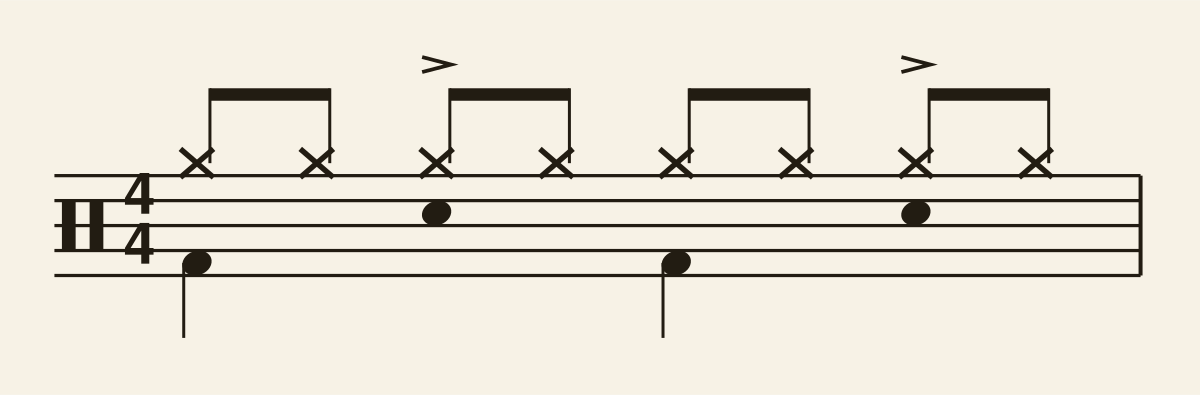
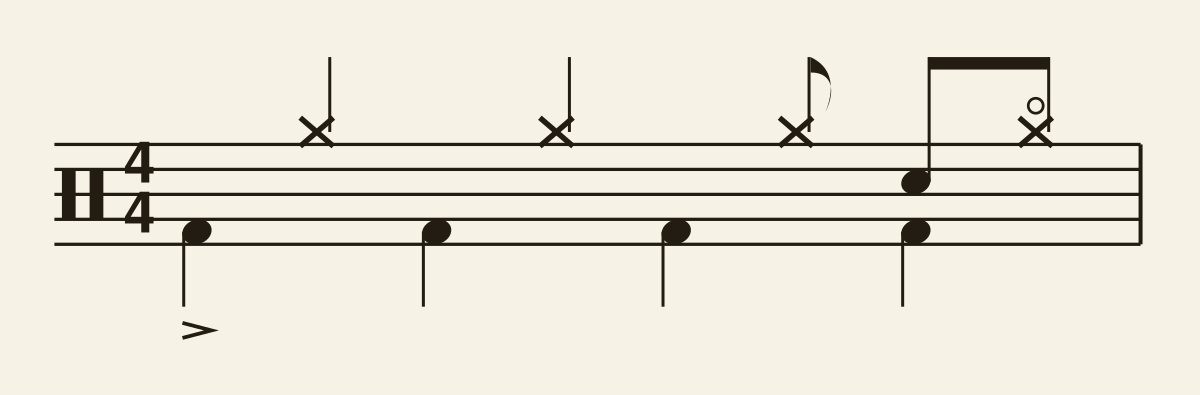
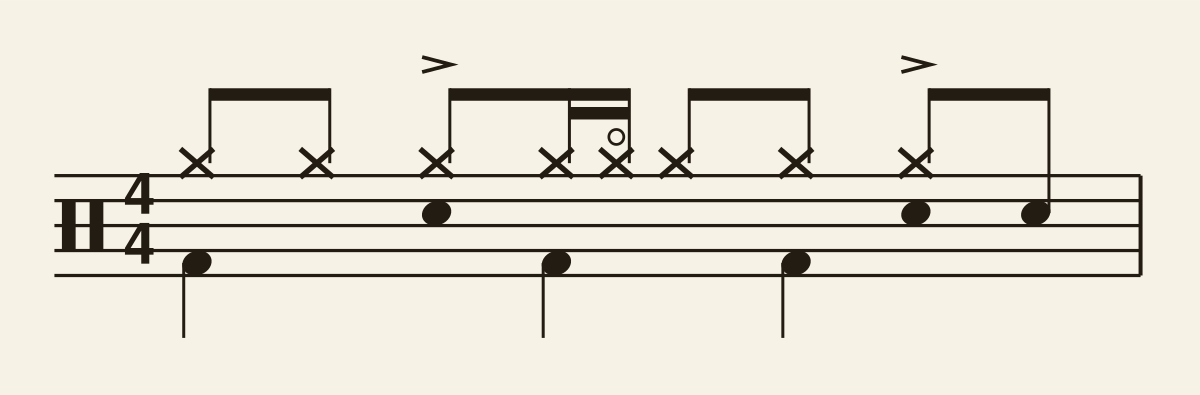
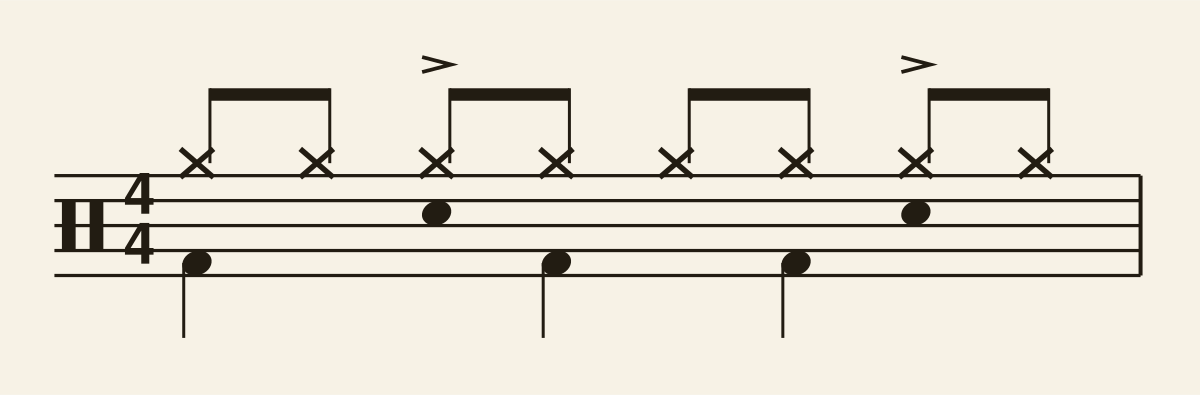
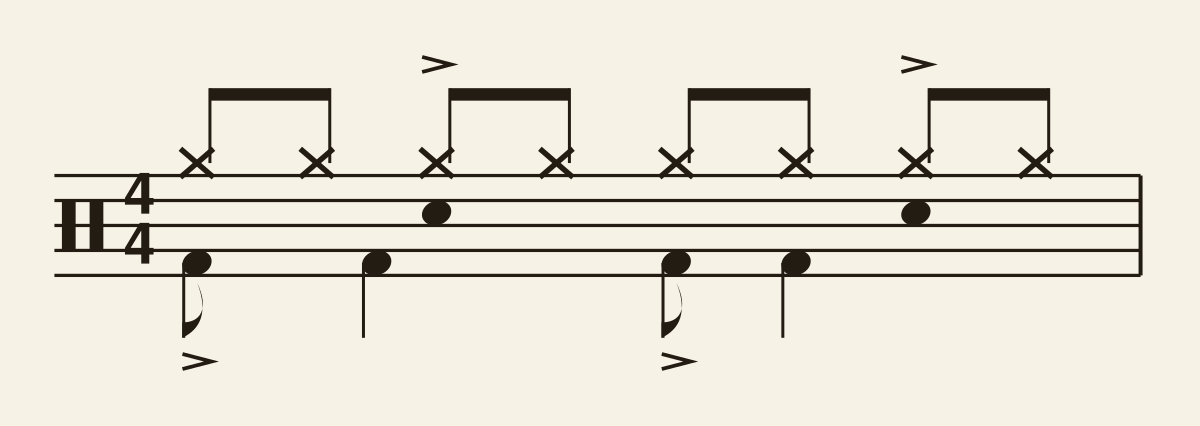
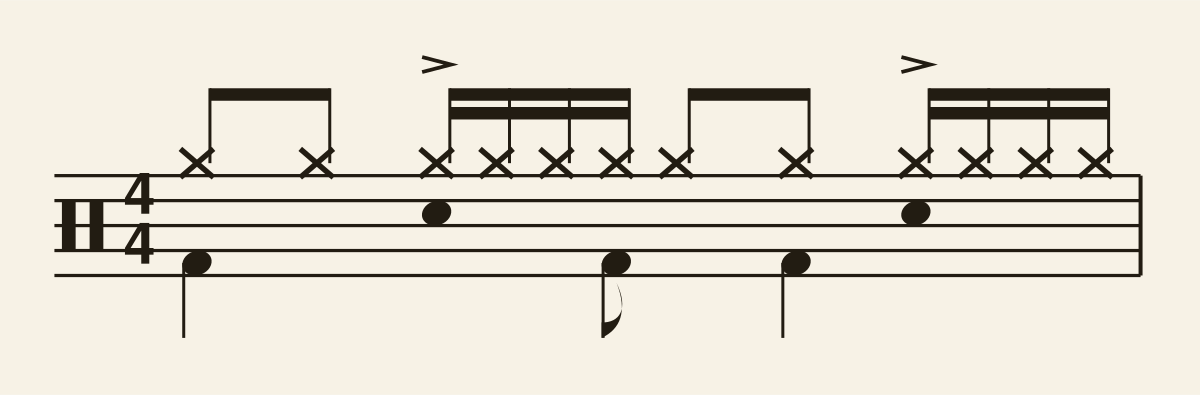
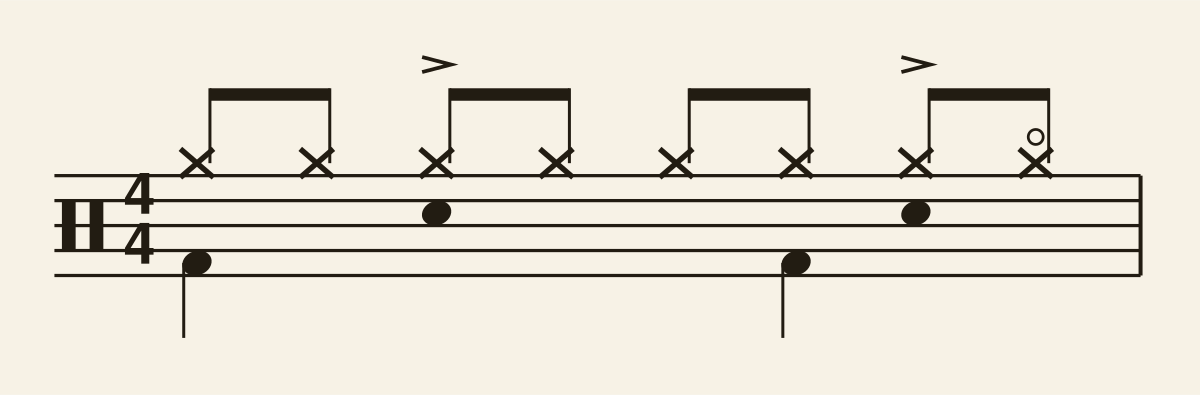
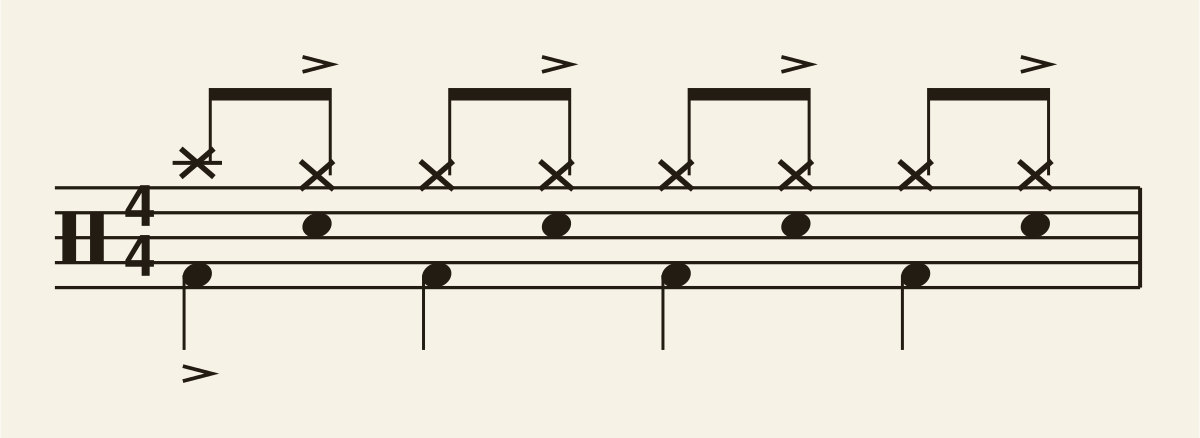
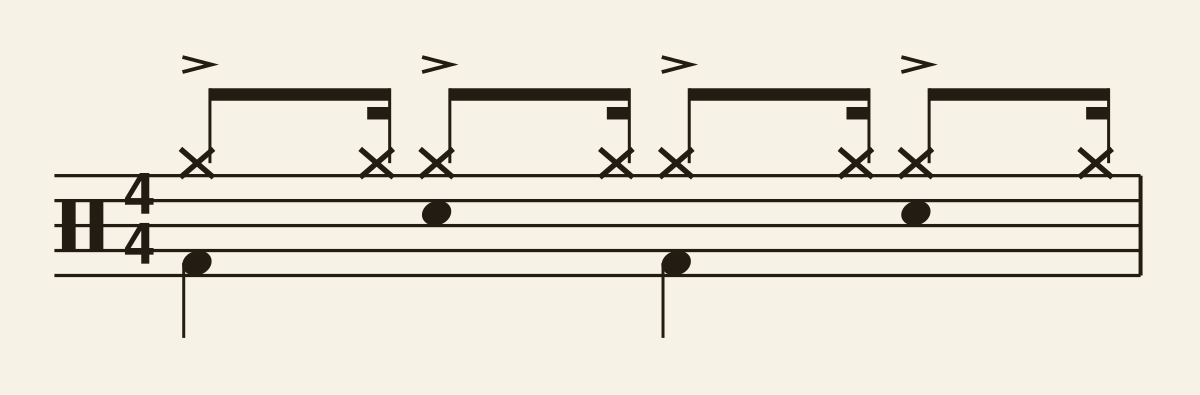
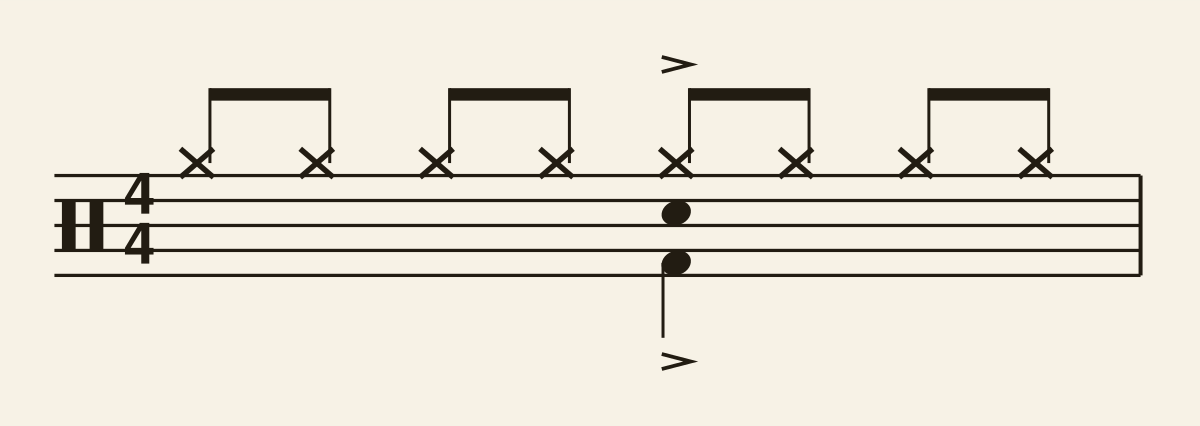
A basic drum pattern needs only three voices: a kick for the low pulse, a snare for the backbeat, and a cymbal hand keeping time. The basic rock pattern is the canonical example — kick on 1 and 3, snare on 2 and 4, hi-hat on eighth notes — and once you can hold it steady, most of the other patterns here are one change away from it. Move the second kick late and you have the pop pattern; put a kick on every beat and you have house.
Simple drum patterns for beginners
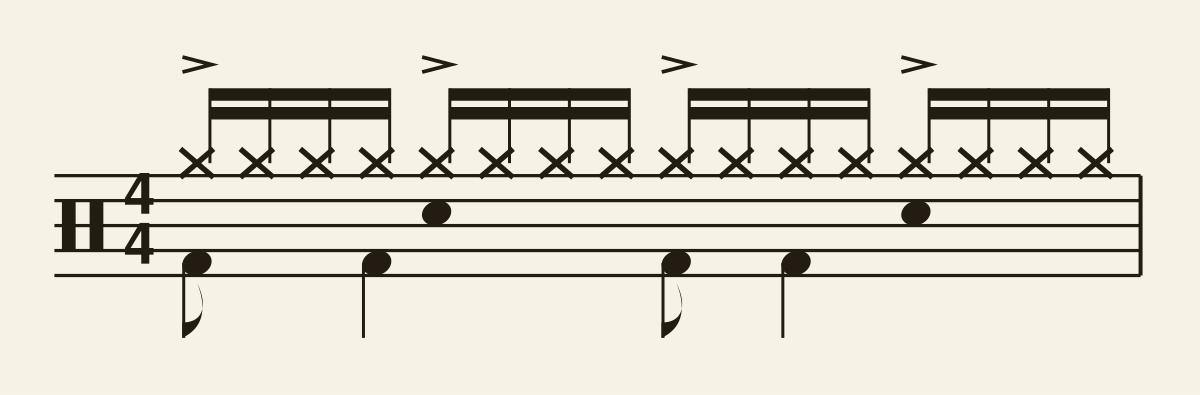
10 of the 20 patterns here are marked beginner, meaning no syncopation you have to count carefully and no sixteenth-note cymbal hand. Work through them in this order:
- Basic Rock Drum Pattern — 100 BPM, 12 notes in the bar
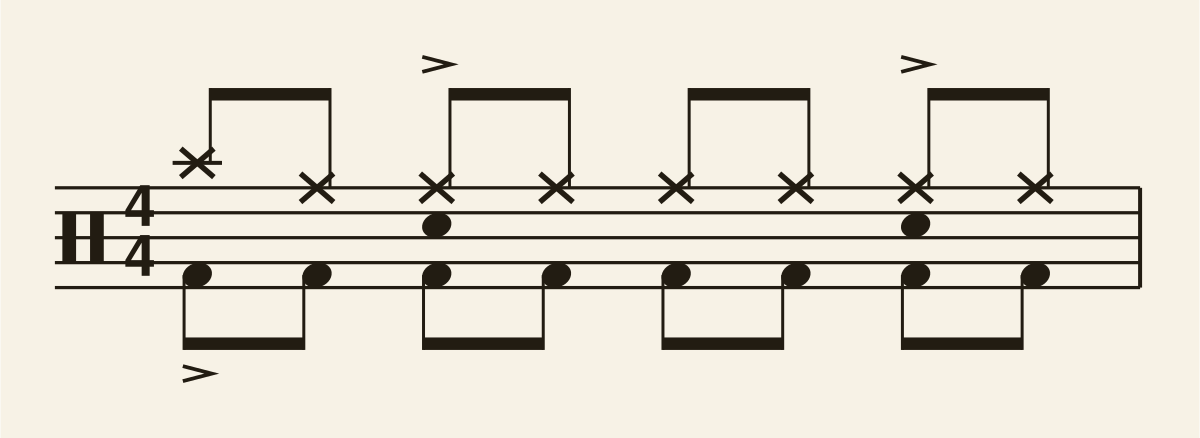
- House Drum Pattern — 124 BPM, 14 notes in the bar
- Techno Drum Pattern — 132 BPM, 9 notes in the bar
- Disco Drum Pattern — 118 BPM, 14 notes in the bar
- Lo-fi Drum Pattern — 72 BPM, 10 notes in the bar
- Hip-Hop Drum Pattern — 90 BPM, 13 notes in the bar
- Pop Drum Pattern — 110 BPM, 12 notes in the bar
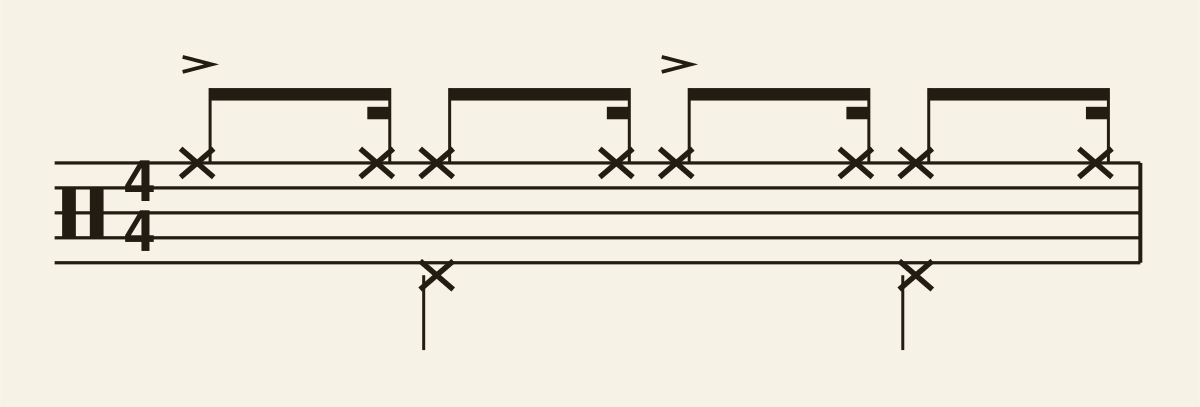
- Reggae Drum Pattern — 76 BPM, 10 notes in the bar
The rule for all of them is the same: slow the loop down until you can play it perfectly, then raise the tempo by five BPM at a time. Playing a groove badly fast teaches your hands the mistake.
Common drum patterns, and how they differ
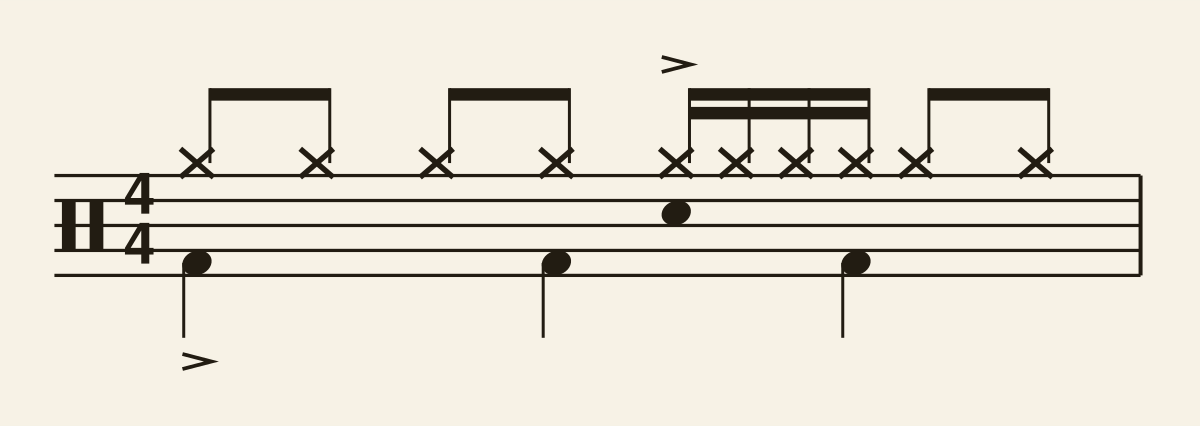
Nearly every common drum pattern is a decision about three things: where the kick goes, what the cymbal hand plays, and whether there is a backbeat at all.
- Backbeat patterns — snare on 2 and 4. Rock, pop, punk, metal, hip-hop, funk, R&B, breakbeat.
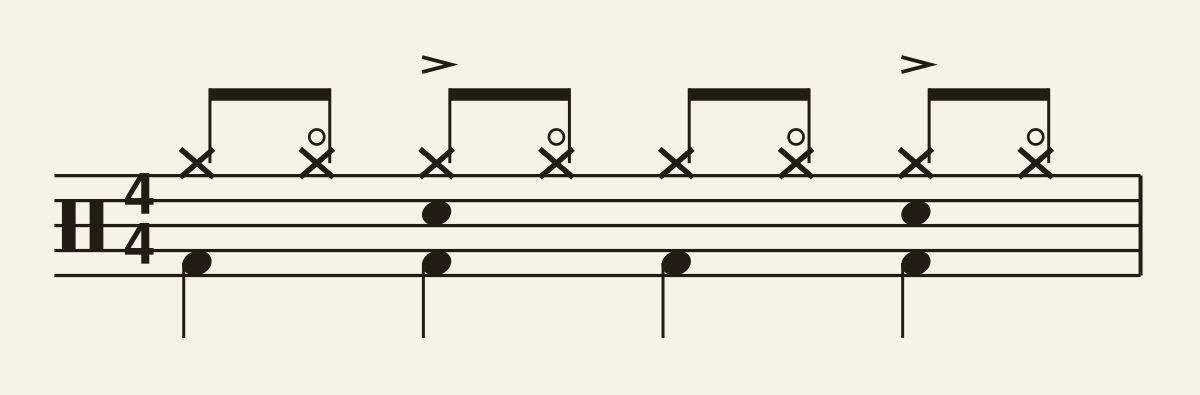
- Four-on-the-floor patterns — kick on every beat. House, disco, techno. The pulse is stated rather than implied, which is what makes them danceable.
- Half-time patterns — snare on beat 3 only, so the bar feels twice as long. Trap is the clearest example.
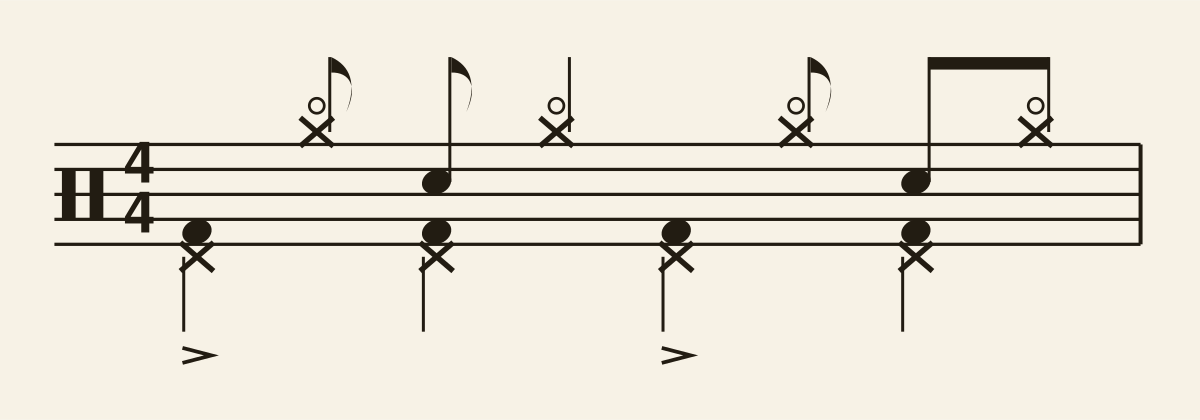
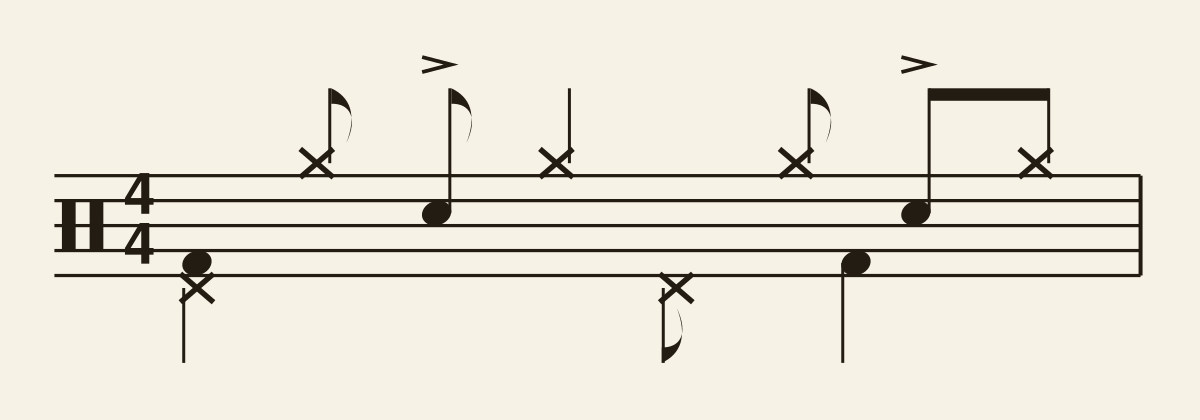
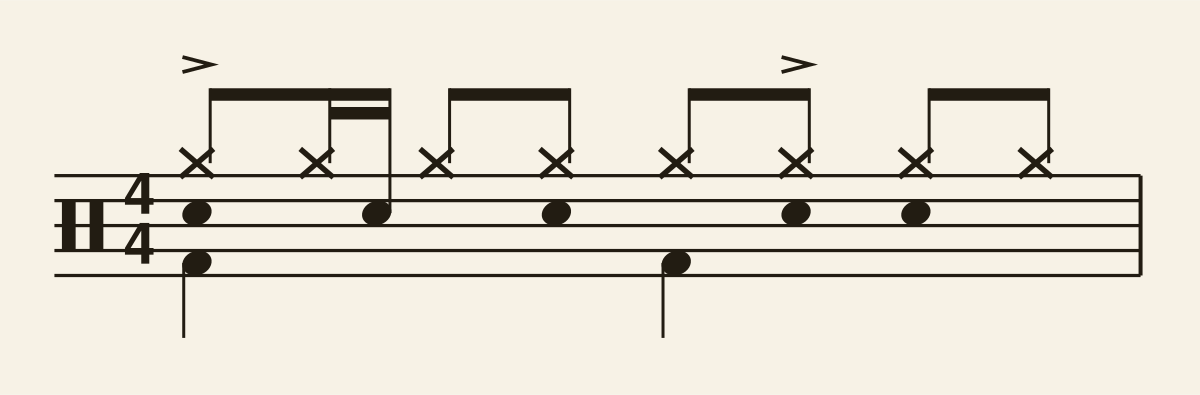
- Displaced patterns — the backbeat moves. Reggae’s one drop empties beat 1 entirely; Latin replaces the backbeat with clave.
- Triplet-feel patterns — each beat splits into three. The blues shuffle and the jazz ride pattern.
Patterns by genre
| Genre | Pattern | Time | Tempo | Level |
|---|---|---|---|---|
| rock | Basic Rock Drum Pattern | 4/4 | 100 BPM | beginner |
| house | House Drum Pattern | 4/4 | 124 BPM | beginner |
| techno | Techno Drum Pattern | 4/4 | 132 BPM | beginner |
| trap | Trap Drum Pattern | 4/4 | 140 BPM | intermediate |
| breakbeat | Breakbeat Drum Pattern | 4/4 | 136 BPM | intermediate |
| disco | Disco Drum Pattern | 4/4 | 118 BPM | beginner |
| lo-fi | Lo-fi Drum Pattern | 4/4 | 72 BPM | beginner |
| hip-hop | Hip-Hop Drum Pattern | 4/4 | 90 BPM | beginner |
| boom bap | Boom Bap Drum Pattern | 4/4 | 88 BPM | intermediate |
| R&B | R&B Drum Pattern | 4/4 | 76 BPM | intermediate |
| funk | Funk Drum Pattern | 4/4 | 98 BPM | intermediate |
| pop | Pop Drum Pattern | 4/4 | 110 BPM | beginner |
| punk | Punk Drum Pattern | 4/4 | 168 BPM | intermediate |
| metal | Metal Drum Pattern | 4/4 | 170 BPM | intermediate |
| blues | Blues Shuffle Drum Pattern | 4/4 | 92 BPM | intermediate |
| jazz | Jazz Ride Drum Pattern | 4/4 | 140 BPM | intermediate |
| reggae | Reggae Drum Pattern | 4/4 | 76 BPM | beginner |
| Latin | Latin Drum Pattern | 4/4 | 96 BPM | intermediate |
| waltz | Waltz Drum Pattern | 3/4 | 104 BPM | beginner |
| 6/8 | 6/8 Drum Pattern | 6/8 | 100 BPM | beginner |
Counting and time signatures
Eighteen of these patterns are in 4/4, counted 1 e & a 2 e & a 3 e & a 4 e & a when you need sixteenths. Two are deliberately not, because learning to feel a bar that is not four beats long is the fastest way to stop hearing everything as rock.
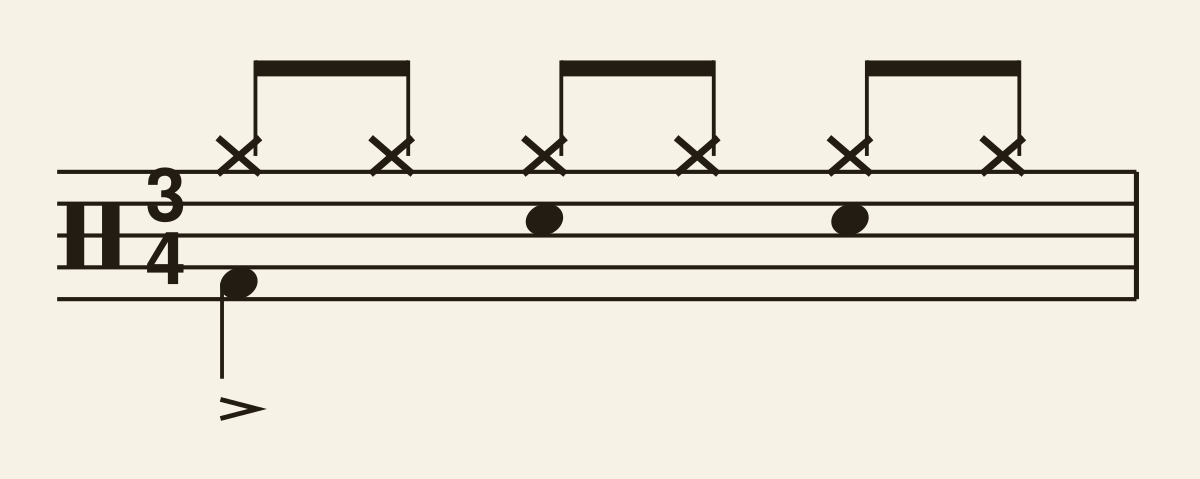
Three beats to the bar: Waltz Drum Pattern
1 e & a 2 e & a 3 e & a
Count “ONE two three” and put all the weight on the 1. Play the waltz pattern →
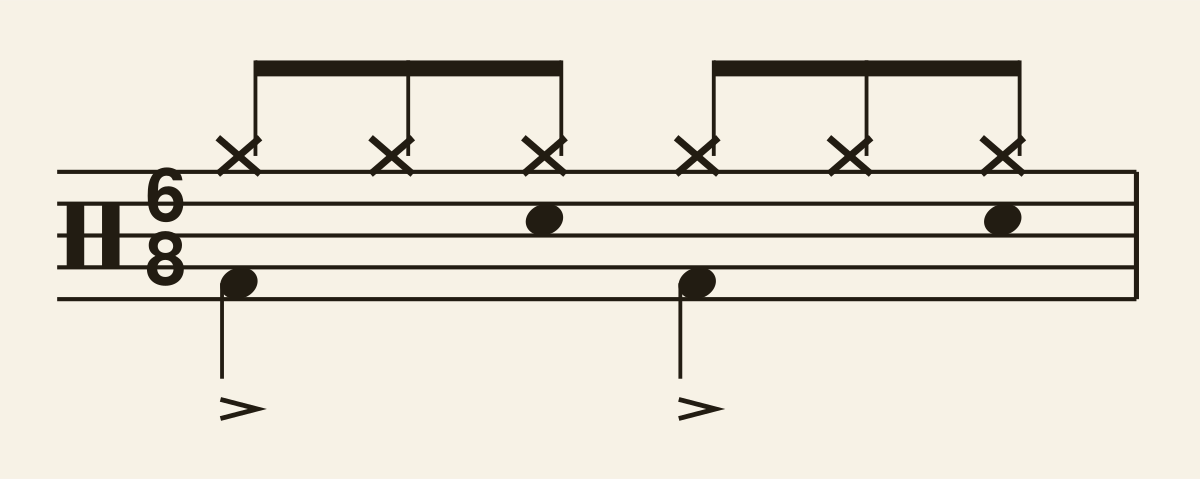
Two big beats of three: 6/8 Drum Pattern
1 2 3 4 5 6
Six eighth notes per bar, felt as two groups of three — count “ONE two three FOUR five six”. Play the 6/8 pattern →
Drum patterns cheat sheet (PDF)
All 20 patterns on one printable page in standard notation, with genre, tempo and time signature — generated from the same data as the notation above. Letter and A4, no email required.
Frequently asked questions
What is the most common drum pattern?
The basic rock pattern, often nicknamed the money beat: bass drum on beats 1 and 3, snare on beats 2 and 4, hi-hat playing steady eighth notes throughout. It underpins an enormous amount of rock, pop, country and blues, and it is the first pattern almost every drummer learns. Every other pattern on this page is a variation on where the kick moves and what the cymbal hand plays.
What drum patterns should a beginner learn first?
Start with the basic rock pattern until you can hold it for two minutes without drifting. Then learn the pop pattern (same idea with a late kick), the hip-hop pattern (slower, with the kick moved off the beat), and a four-on-the-floor pattern like house or disco. Those four cover the two things every groove needs: a steady cymbal hand and a kick you can move independently of it.
What is a drum pattern?
A drum pattern is a short, repeating arrangement of drum and cymbal hits — usually one or two bars long — that sets the groove for a piece of music. It specifies which surfaces are struck (kick, snare, hi-hat, ride, toms) and exactly when in the bar each hit falls. Patterns loop, so a whole song is typically built from one or two patterns plus fills between sections.
Drum pattern data last updated . Every diagram here, in the printable PDF and in the chart image comes from one dataset, so the paper and the screen cannot disagree.