Piano · 30 chords
Piano Chord Chart
Every major and minor triad, plus the six dominant 7ths you meet first — each one shown on a labeled keyboard with its exact notes. Pick a chord, hear it, then play it.
- CRoot
- EMajor 3rd
- GPerfect 5th
The full piano chord chart
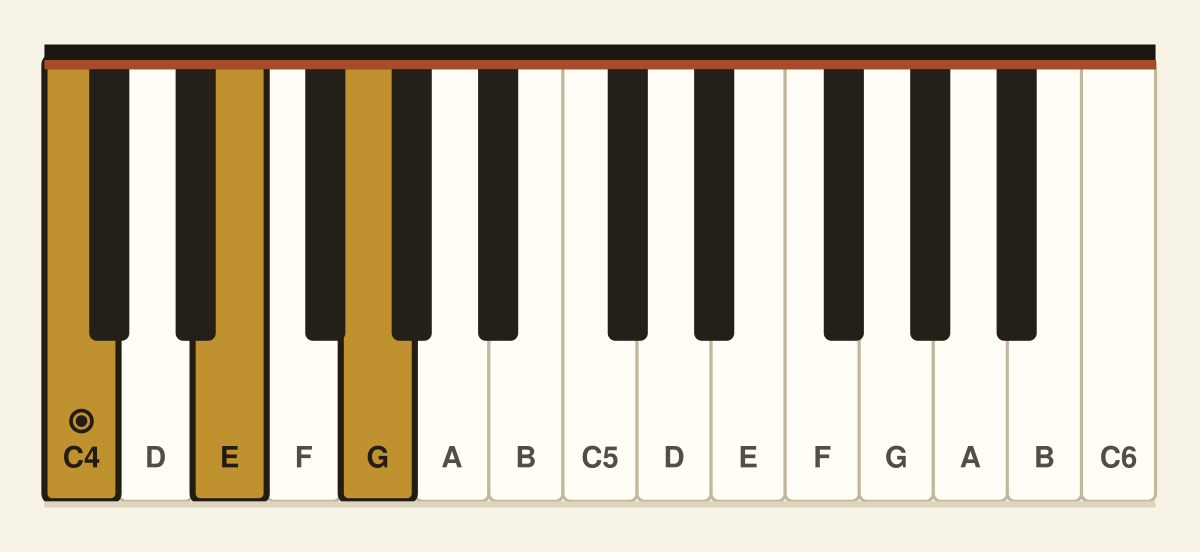
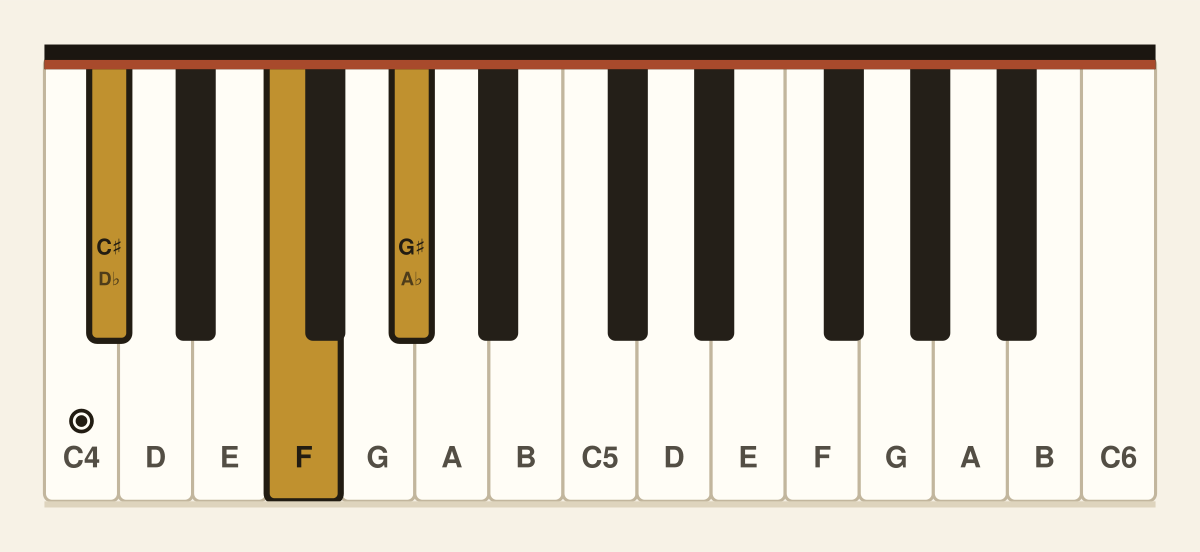
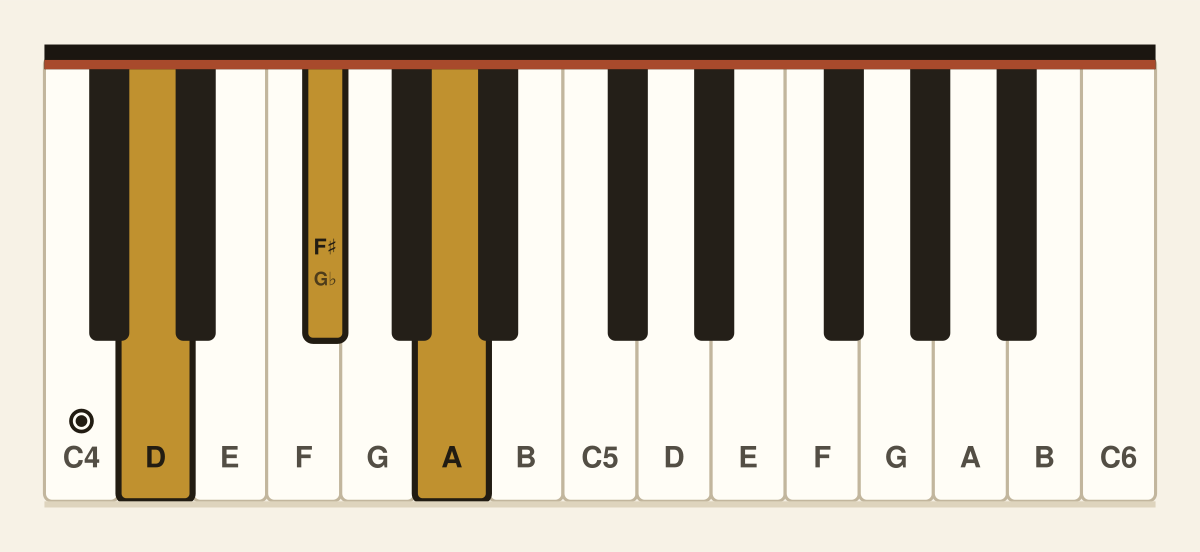
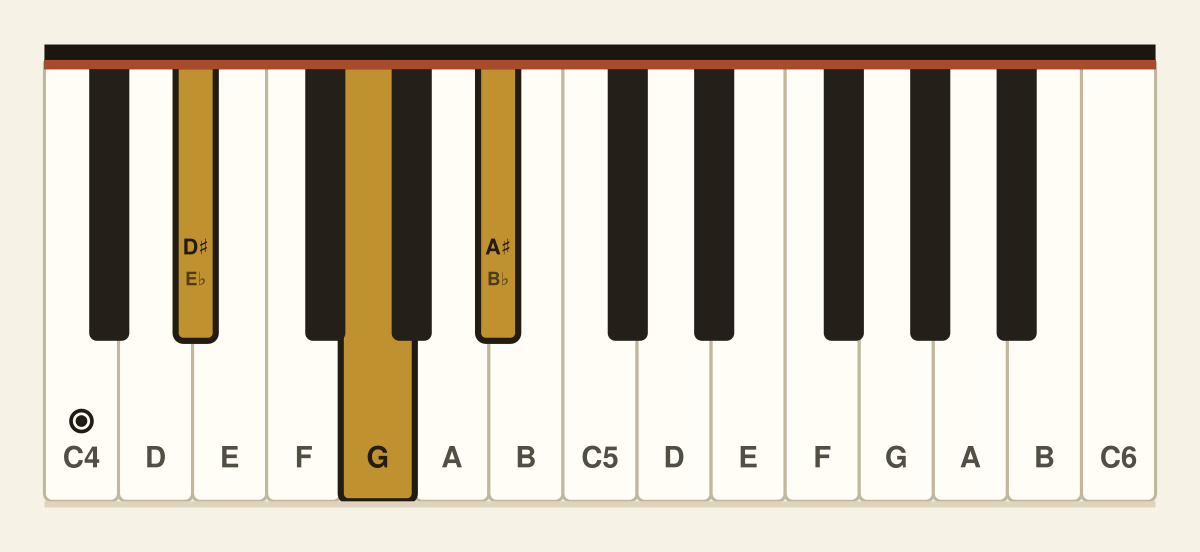
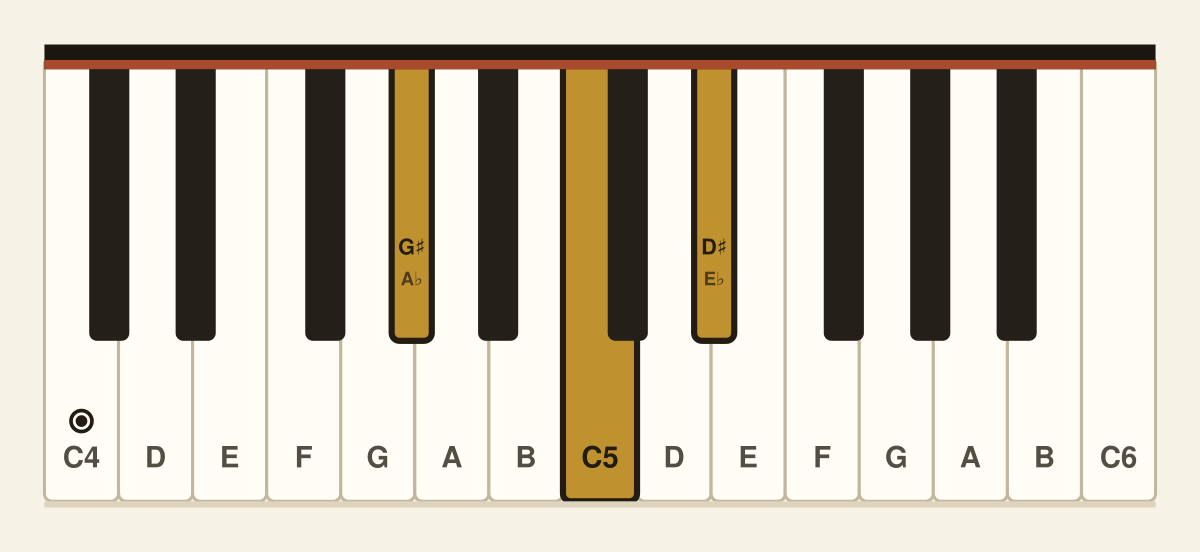
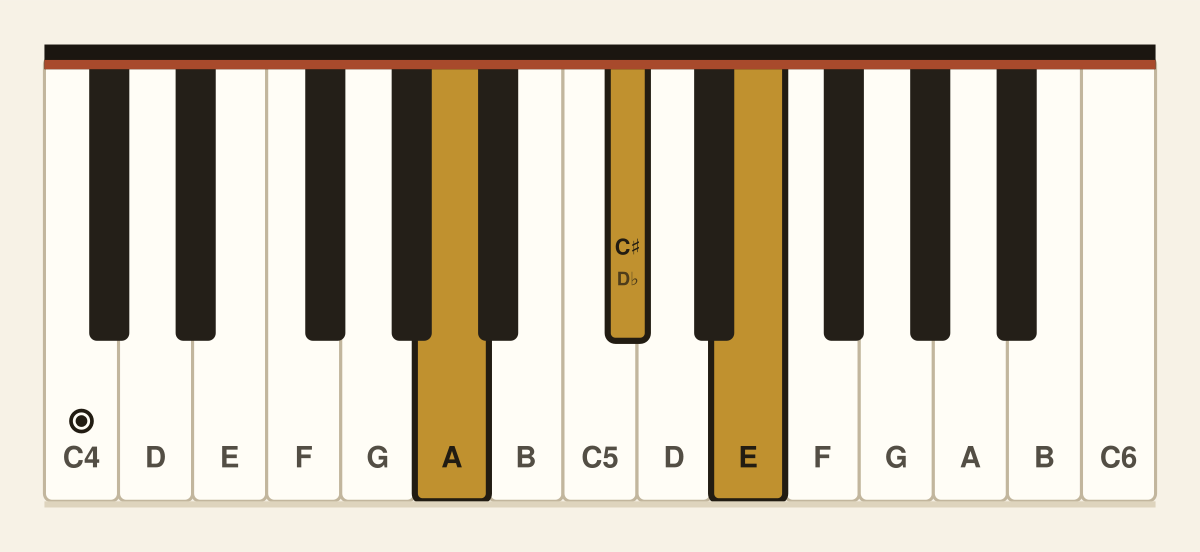
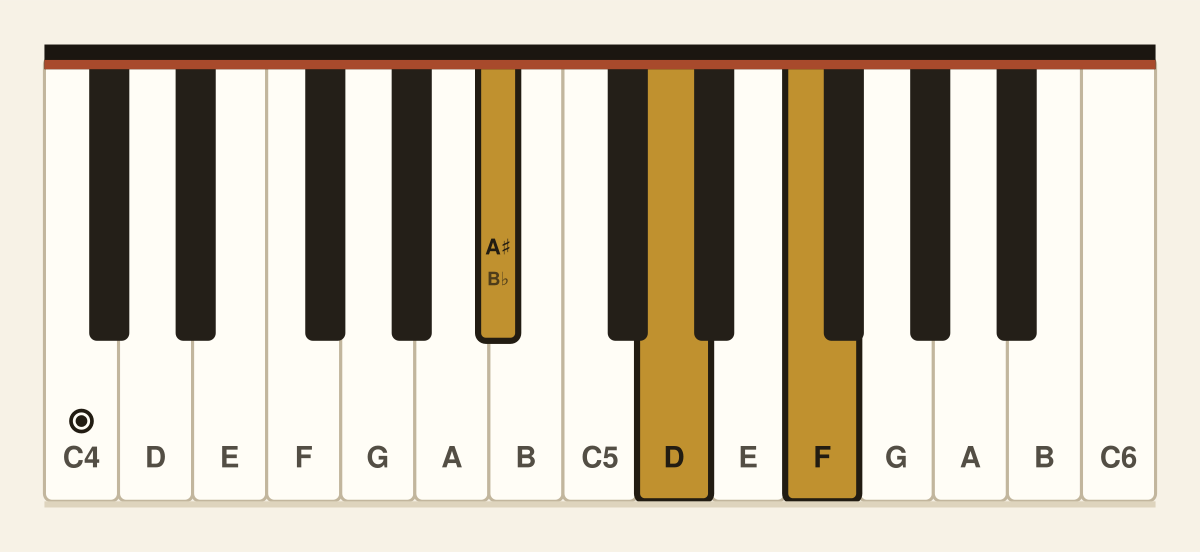
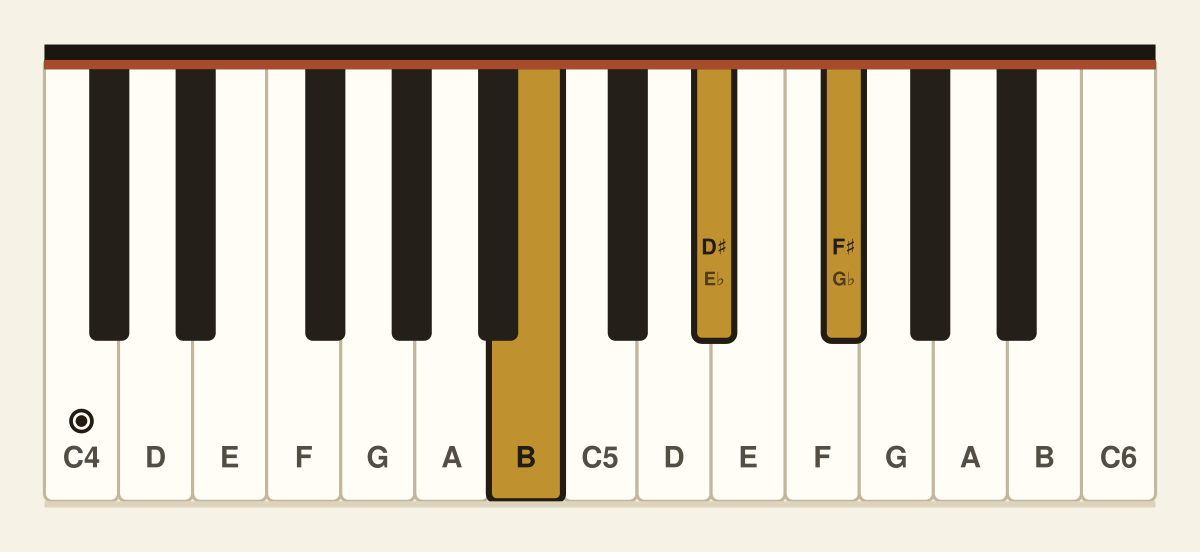
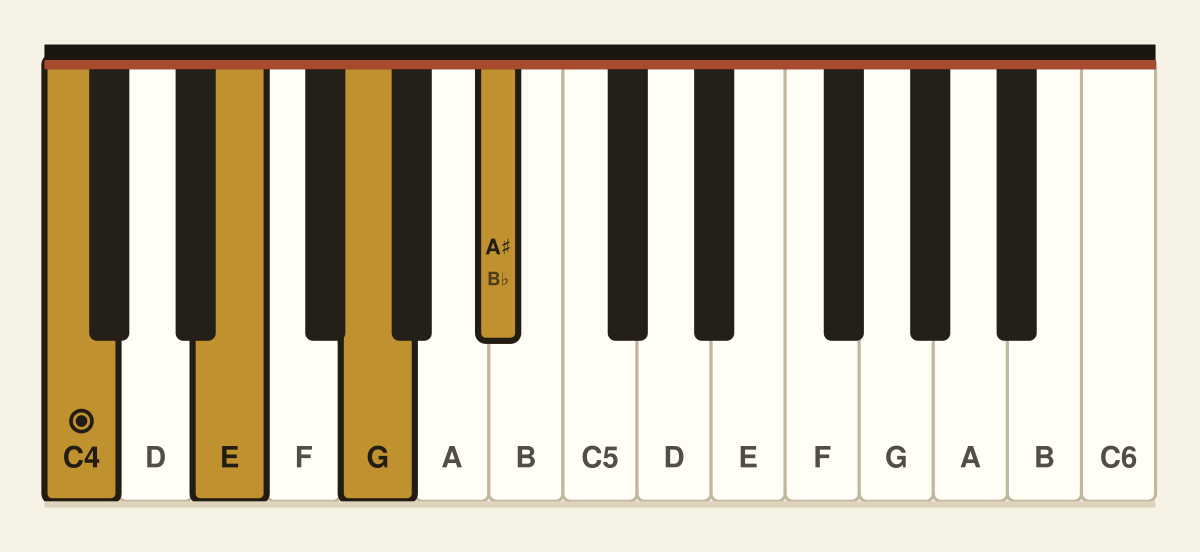
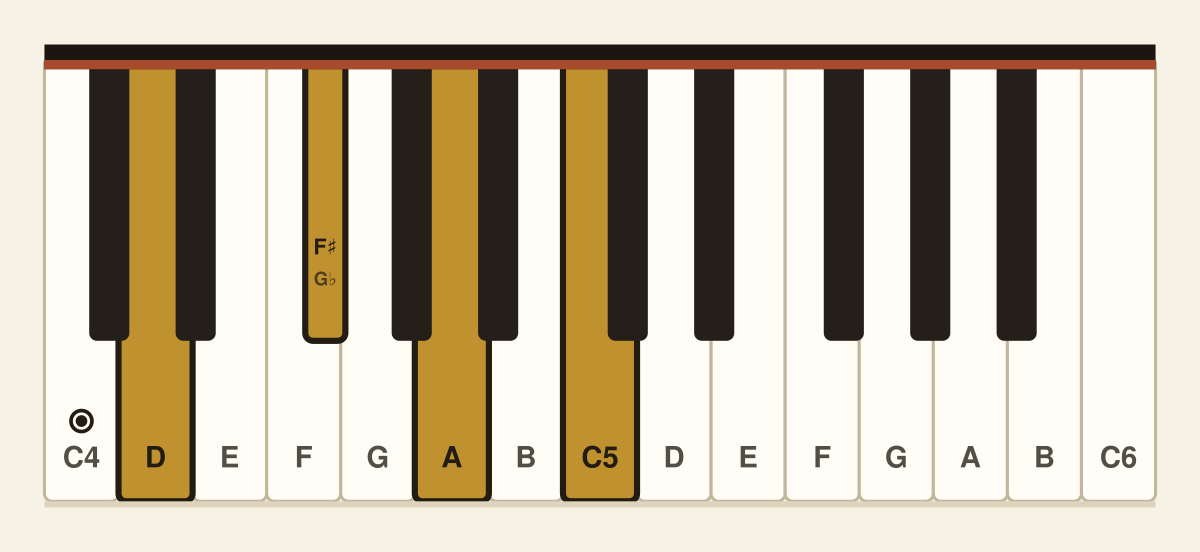
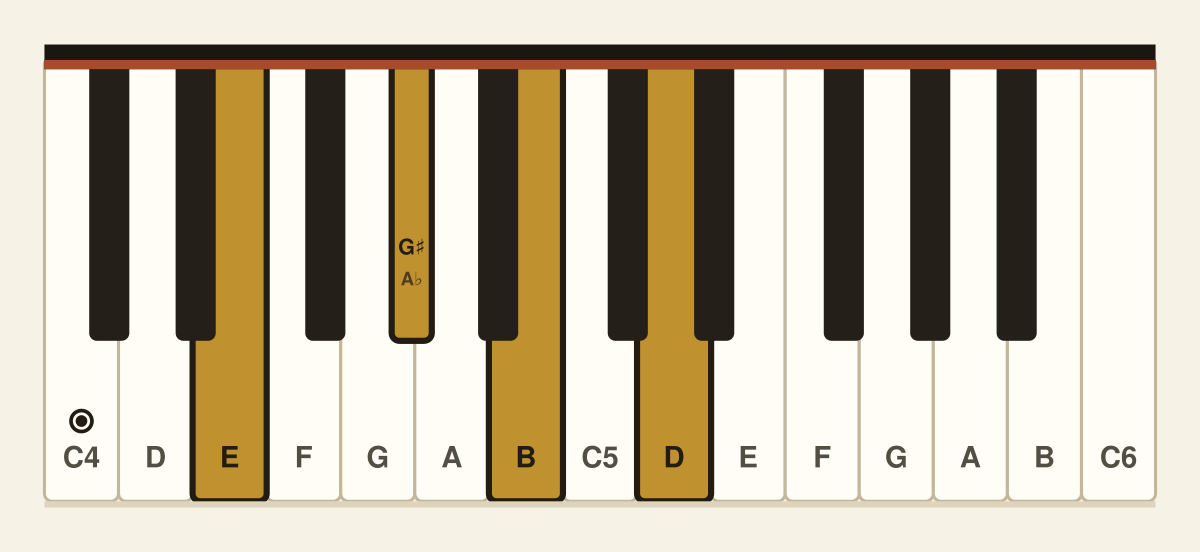
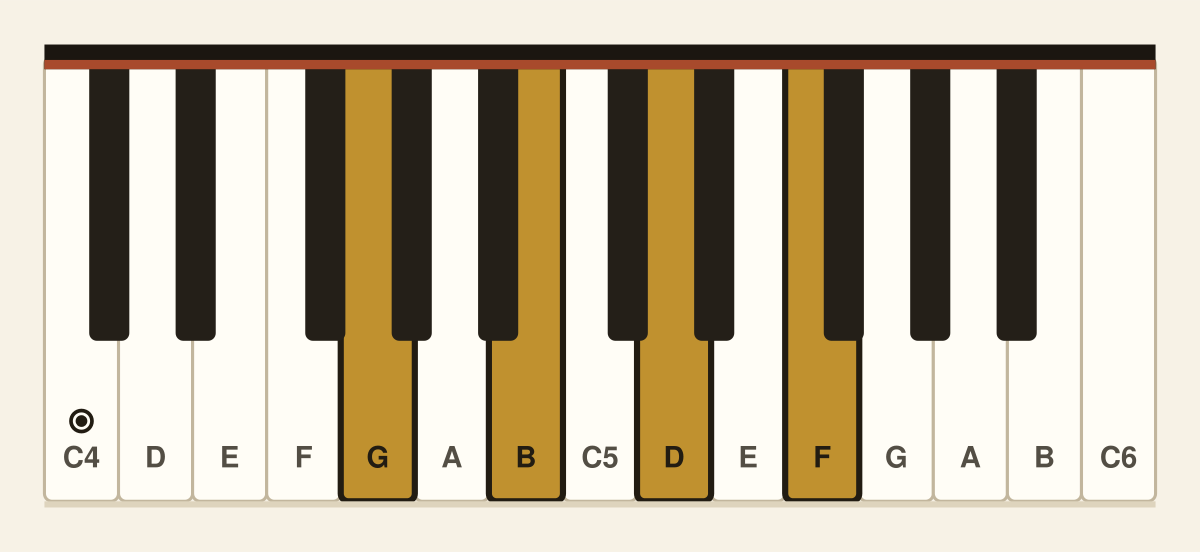
All 30 chords, each drawn on two octaves from middle C with the keys to press filled in and named. Open any chord for its inversions, fingering, staff notation and the mistakes to watch for.
All 12 major triads
One for every note of the chromatic scale, spelled the way printed music spells them. Major chords sound bright and settled.
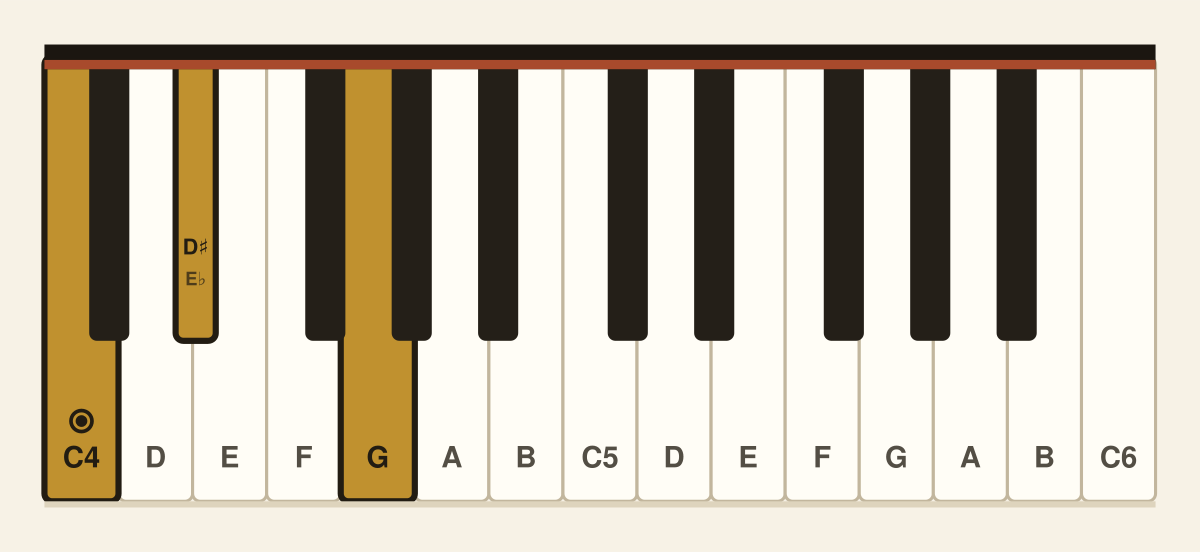
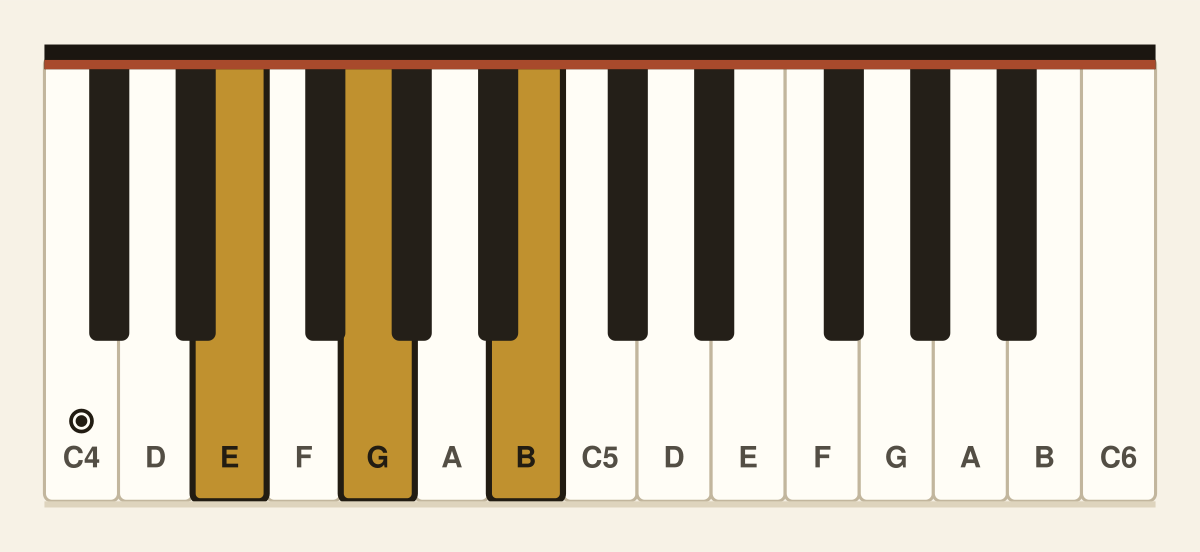
- CC majorBeginner
C · E · G
C chord → - D♭D♭ major
D♭ · F · A♭
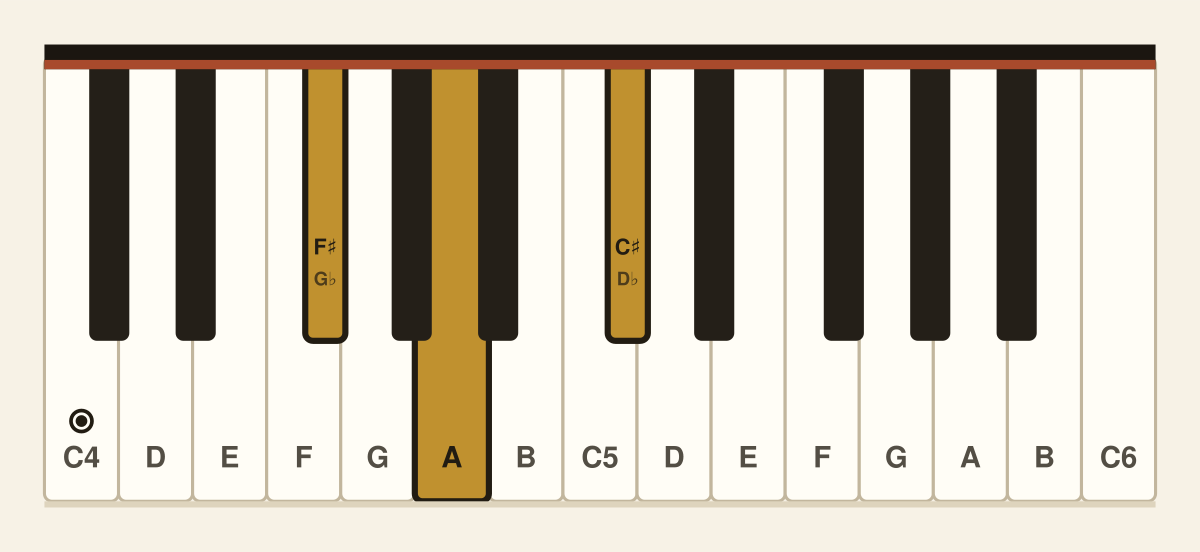
D♭ chord → - DD majorBeginner
D · F♯ · A
D chord → - E♭E♭ major
E♭ · G · B♭
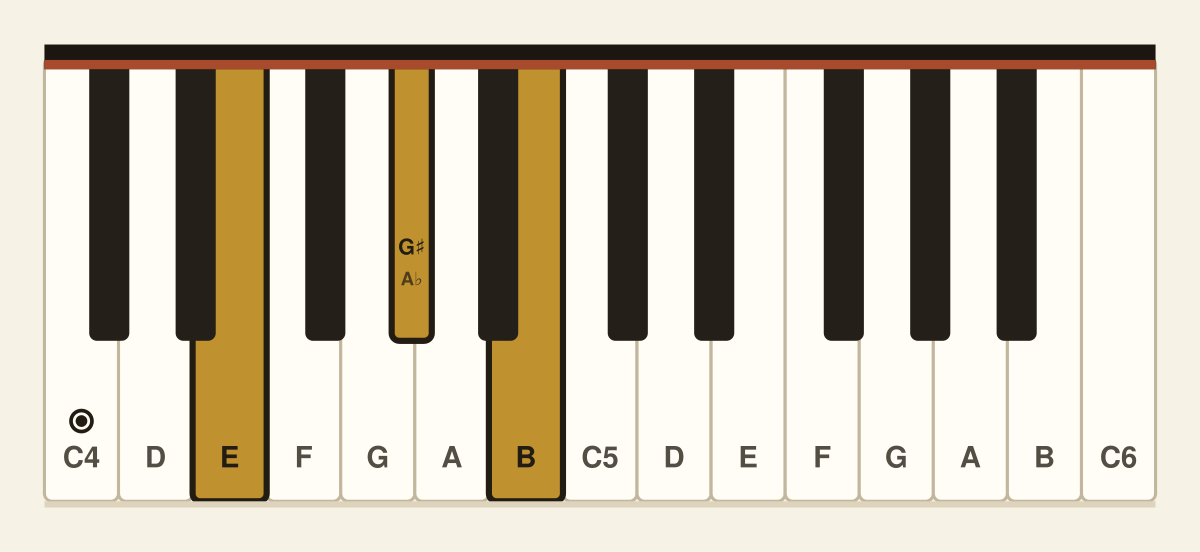
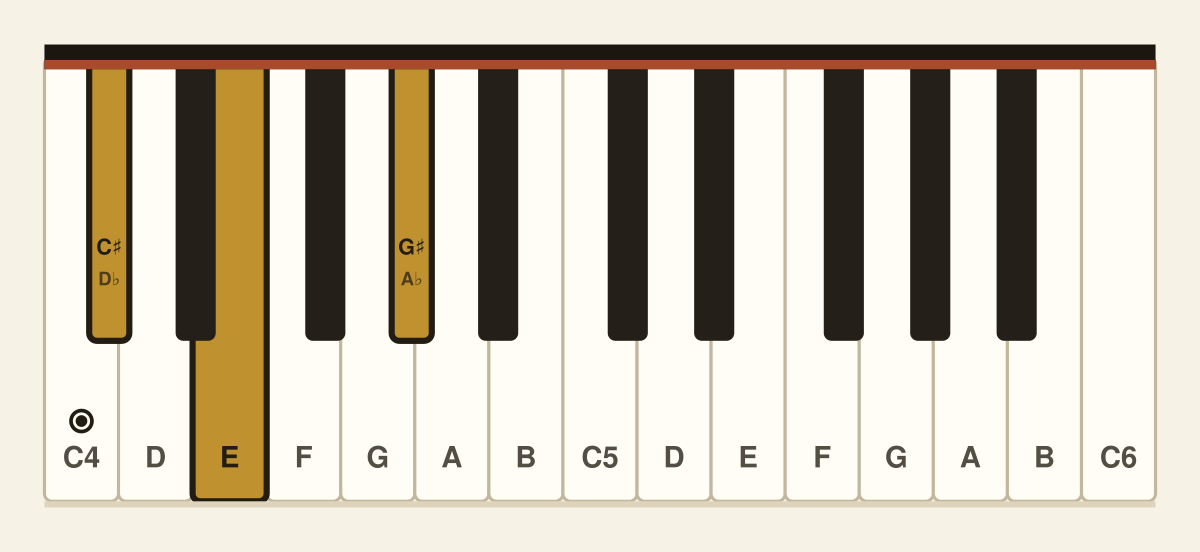
E♭ chord → - EE majorBeginner
E · G♯ · B
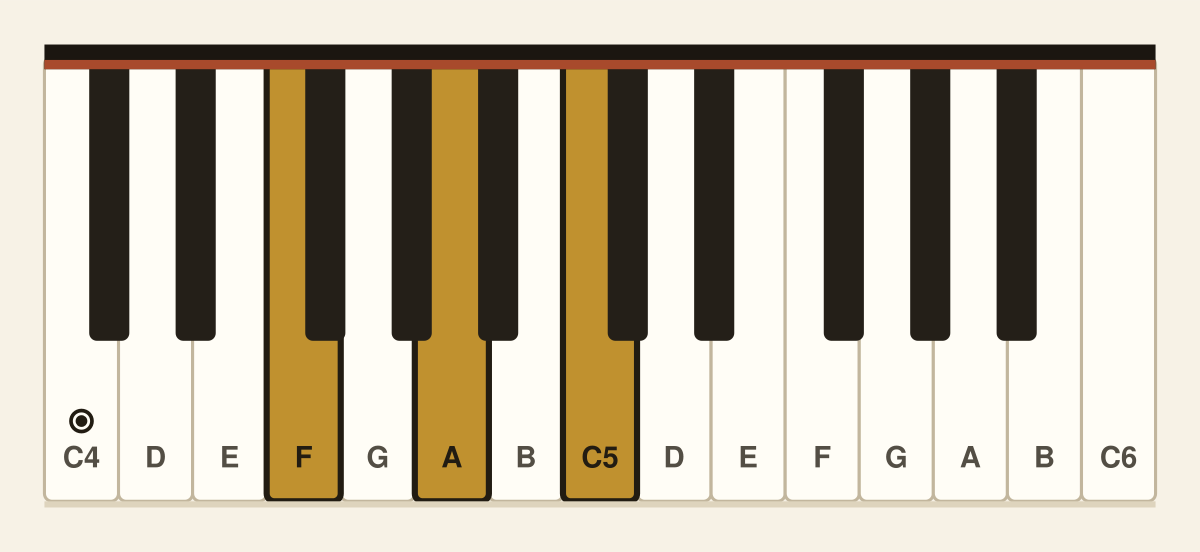
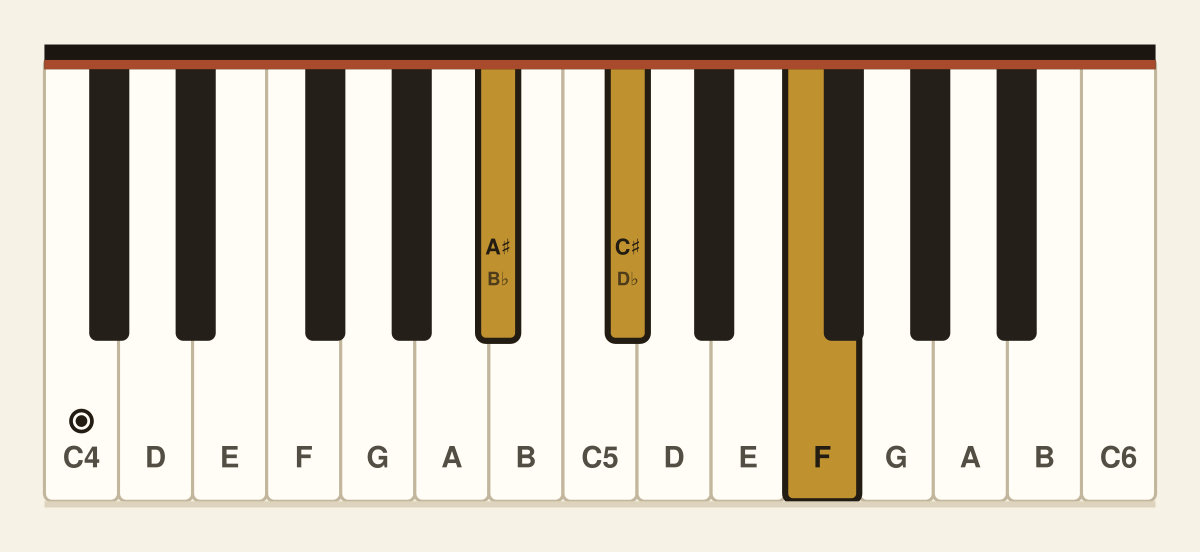
E chord → - FF majorBeginner
F · A · C
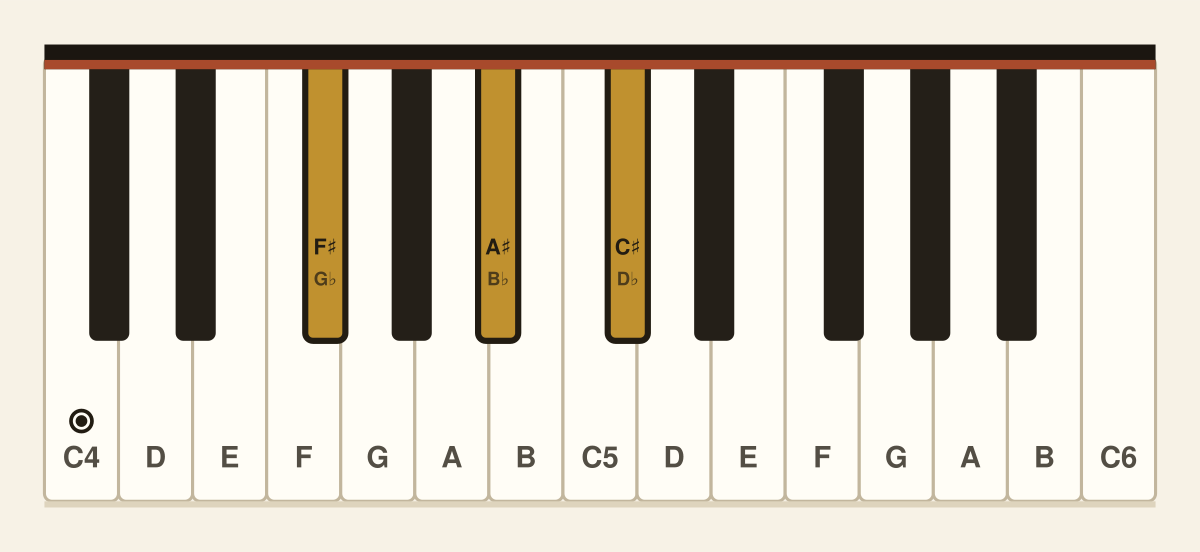
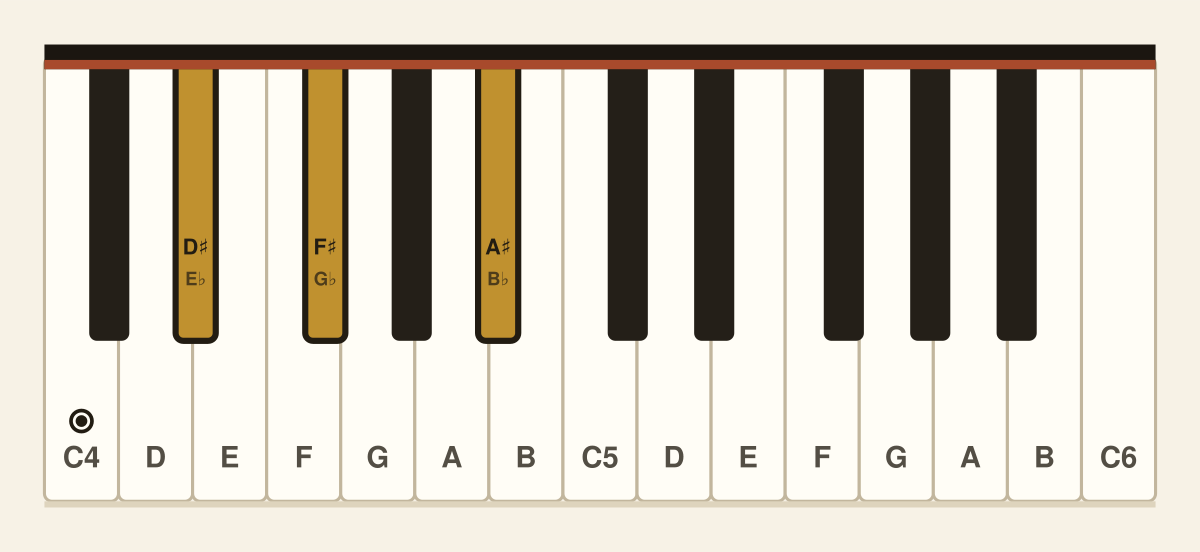
F chord → - F♯F♯ major
F♯ · A♯ · C♯
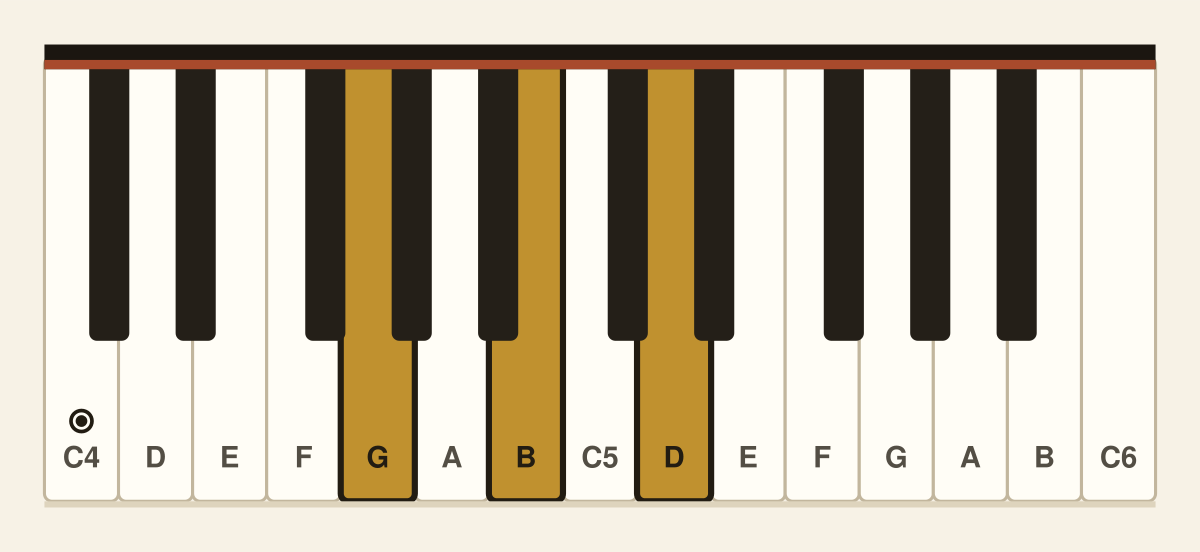
F♯ chord → - GG majorBeginner
G · B · D
G chord → - A♭A♭ major
A♭ · C · E♭
A♭ chord → - AA majorBeginner
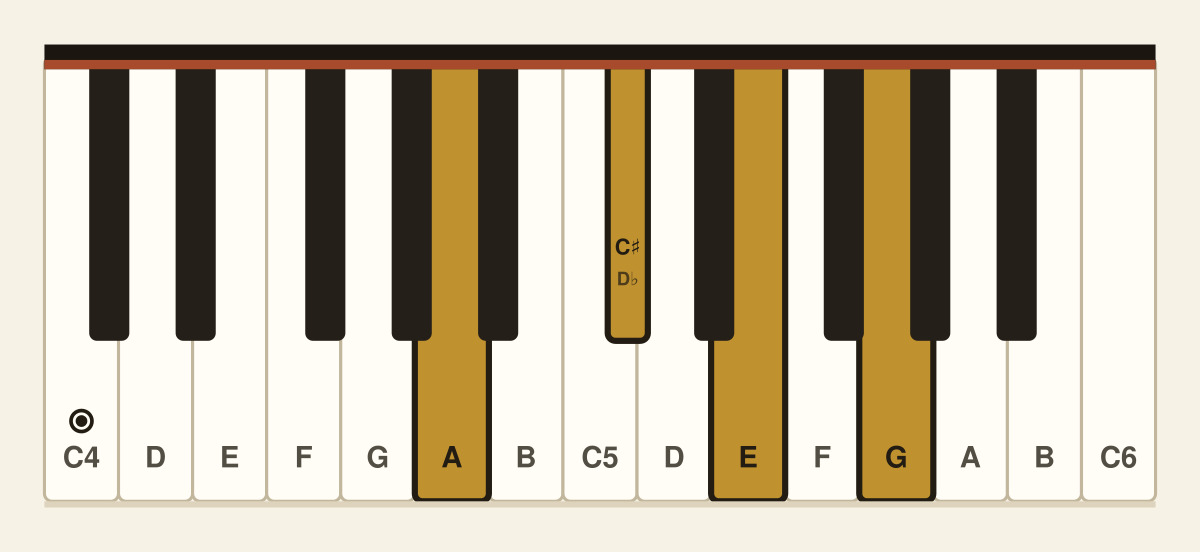
A · C♯ · E
A chord → - B♭B♭ major
B♭ · D · F
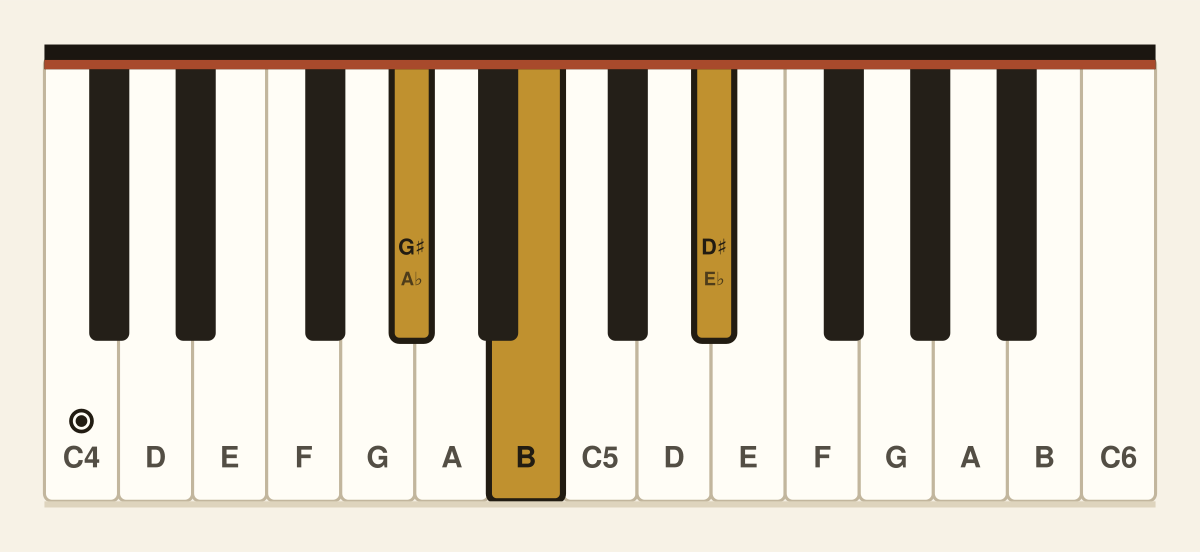
B♭ chord → - BB major
B · D♯ · F♯
B chord →
All 12 minor triads
The same roots with the third lowered one key. Minor chords sound darker and less resolved — the change is a single note.
- CmC minor
C · E♭ · G
Cm chord → - C♯mC♯ minor
C♯ · E · G♯
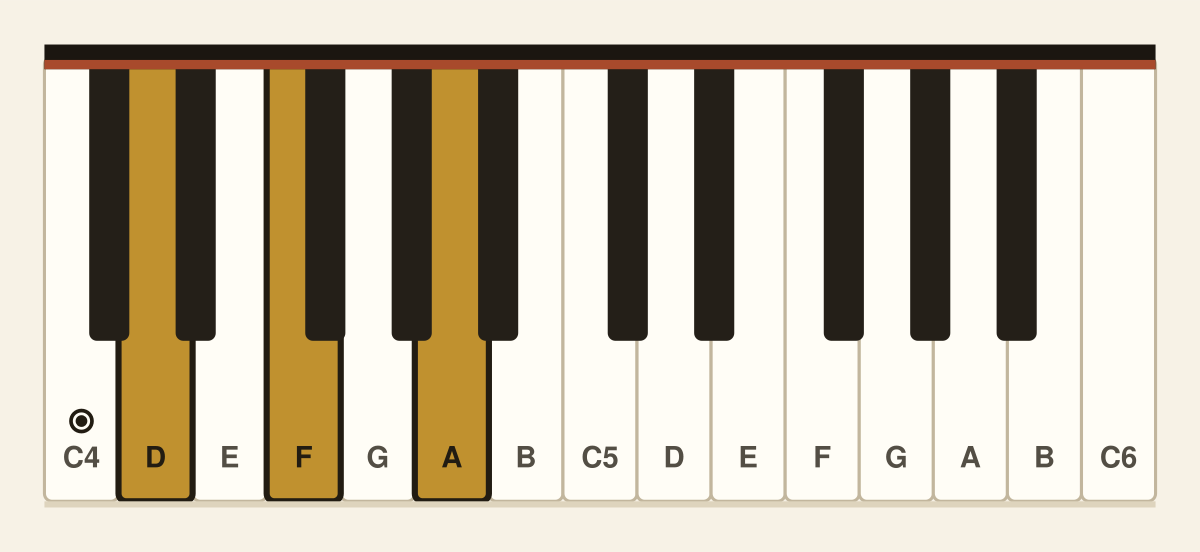
C♯m chord → - DmD minorBeginner
D · F · A
Dm chord → - E♭mE♭ minor
E♭ · G♭ · B♭
E♭m chord → - EmE minorBeginner
E · G · B
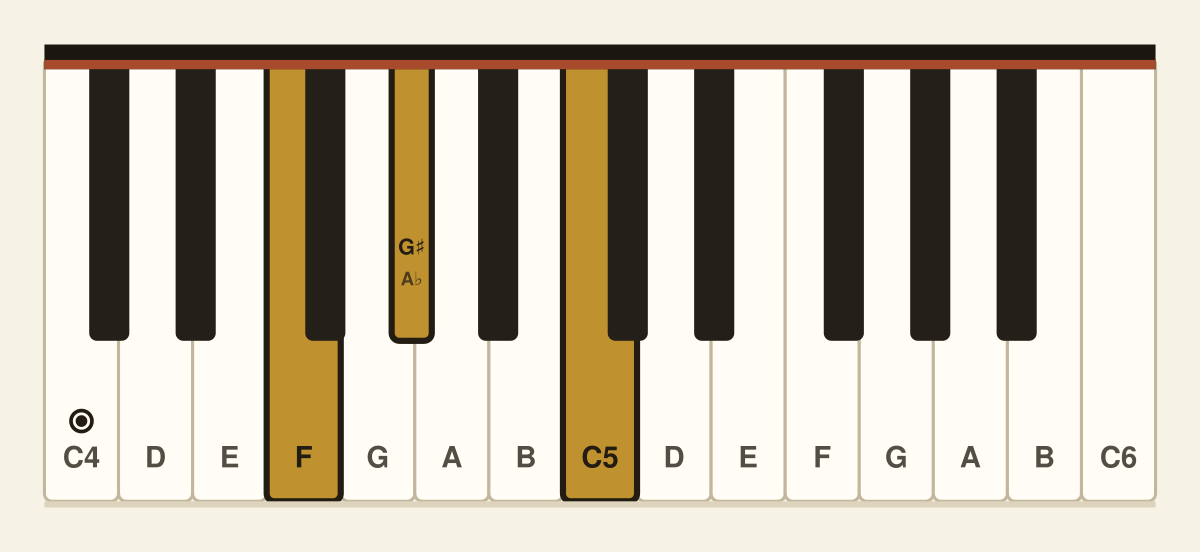
Em chord → - FmF minor
F · A♭ · C
Fm chord → - F♯mF♯ minor
F♯ · A · C♯
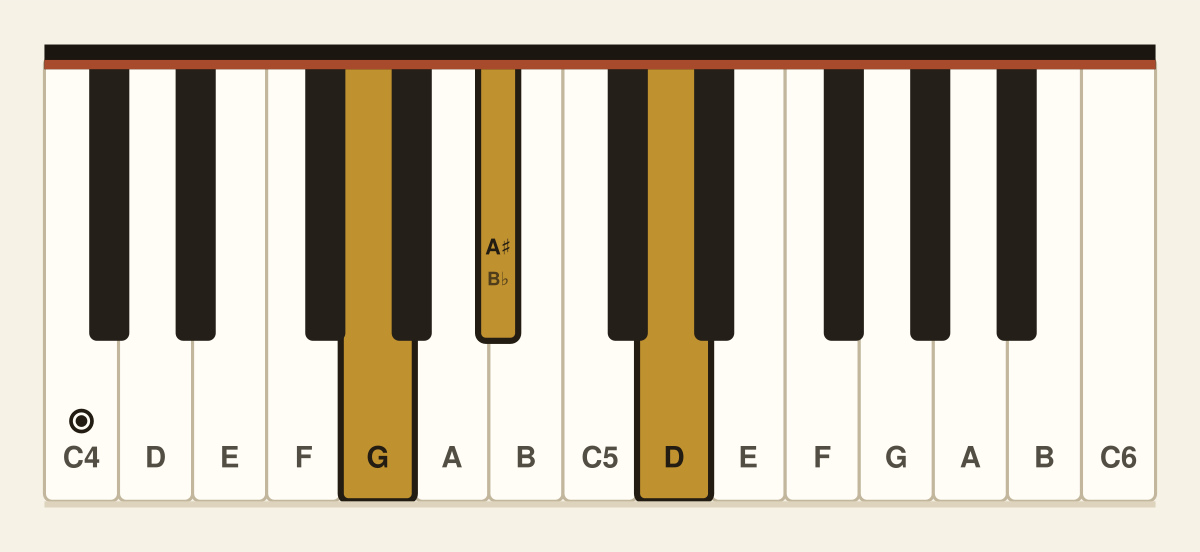
F♯m chord → - GmG minor
G · B♭ · D
Gm chord → - G♯mG♯ minor
G♯ · B · D♯
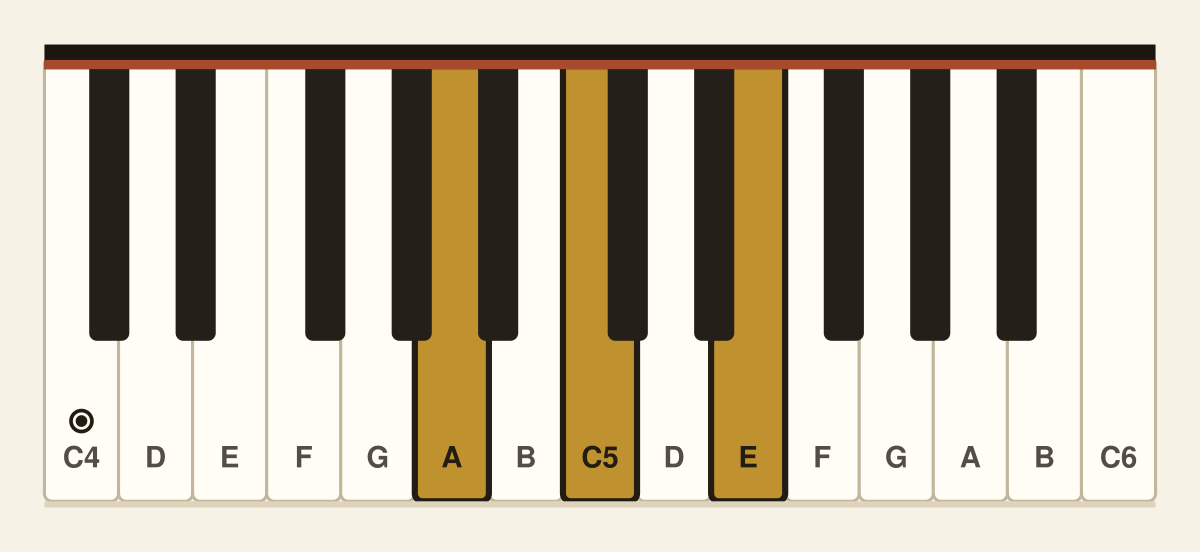
G♯m chord → - AmA minorBeginner
A · C · E
Am chord → - B♭mB♭ minor
B♭ · D♭ · F
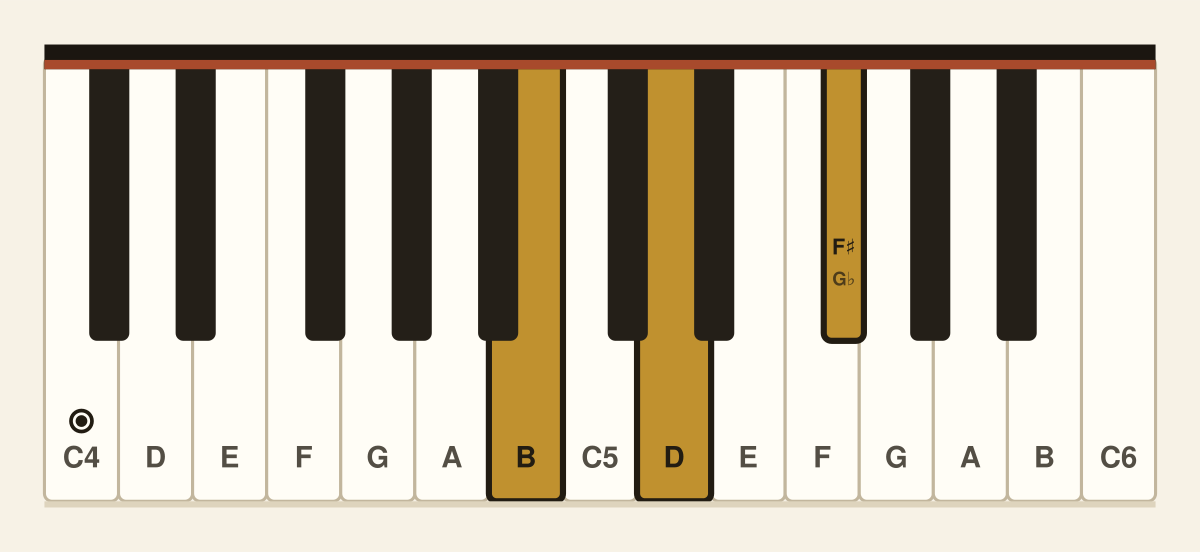
B♭m chord → - BmB minor
B · D · F♯
Bm chord →
The six dominant 7th chords you will meet first
Four-note chords that lean towards a home chord a fifth below. These six carry almost all of the beginner repertoire and the blues.
- C7C dominant 7th
C · E · G · B♭
C7 chord → - D7D dominant 7th
D · F♯ · A · C
D7 chord → - E7E dominant 7th
E · G♯ · B · D
E7 chord → - G7G dominant 7thBeginner
G · B · D · F
G7 chord → - A7A dominant 7th
A · C♯ · E · G
A7 chord → - B7B dominant 7th
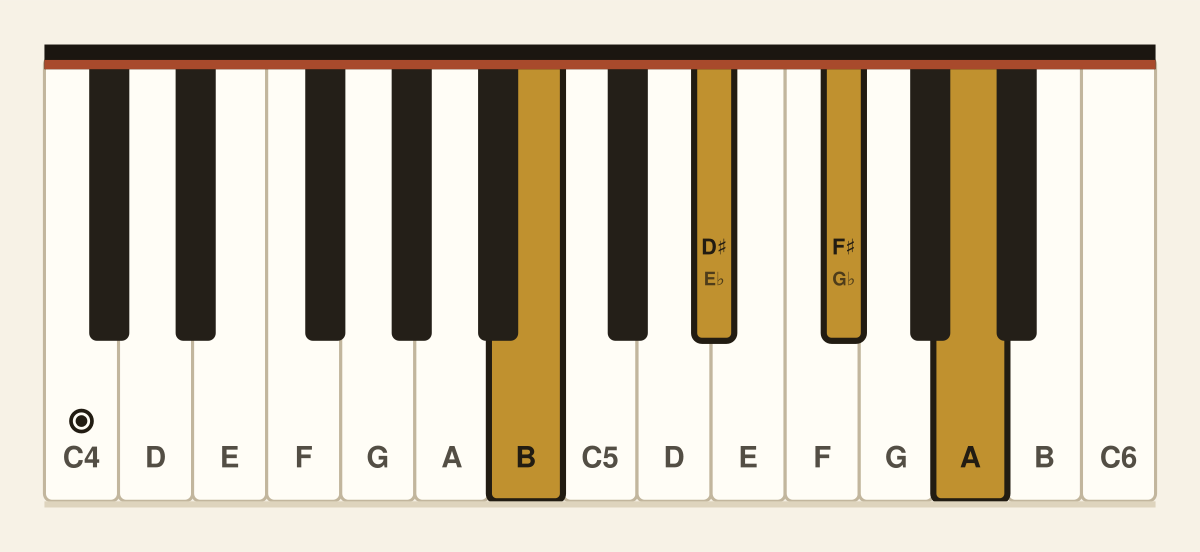
B · D♯ · F♯ · A
B7 chord →
What makes a chord major or minor
A triad is three notes: a root, a third and a fifth. The fifth barely changes anything about the mood — it is the third that decides whether a chord sounds major or minor. Count in semitones (one semitone = the very next key, black or white) and the recipes are this simple:
| Chord type | Built from the root | Semitones | Example on C |
|---|---|---|---|
| Major triad | Major 3rd, then a minor 3rd on top | 0 · 4 · 7 | C–E–G |
| Minor triad | Minor 3rd, then a major 3rd on top | 0 · 3 · 7 | C–E♭–G |
| Dominant 7th | Major triad, then a minor 3rd on top again | 0 · 4 · 7 · 10 | C–E–G–B♭ |
Notice that the root and the fifth are identical in the major and minor versions of a chord. Play C–E–G, then move only the middle finger down one key to E♭: the whole character changes and your hand has barely moved. That one-note difference is the fastest listening test in music.
How to build any major or minor chord from its root
You do not need to memorise 24 shapes. Put a finger on the root and count keys — including the black ones — using one of two patterns:
- Major: up 4, then up 3. From E, four keys up is G♯ (F, F♯, G, G♯) and three more is B. E major is E–G♯–B.
- Minor: up 3, then up 4. From E, three keys up is G and four more is B. E minor is E–G–B.
- Either way, the outer notes are 7 keys apart. That interval is the perfect fifth, and it is the same in both chords — a useful check that you have not miscounted.
The white-key shortcut is worth knowing too: on white keys only, a triad is “skip one, skip one” — C, skip D, E, skip F, G. That gives the right keys for the six chords built on C, D, E, F, G, A and B, but only some of them are major. Counting semitones tells you which; the chart above tells you at a glance.
Reading chord symbols
Chord symbols are shorthand written above the staff or in place of notation entirely. The letter is the root; everything after it describes what is stacked on top.
| Symbol | Means | Notes |
|---|---|---|
| C | C major — a plain letter is always major | C–E–G |
| Cm | C minor. Also written Cmin or C− | C–E♭–G |
| C7 | C dominant 7th — a major triad plus a flattened 7th | C–E–G–B♭ |
| Cmaj7 | C major 7th — a different, much softer chord than C7 | C–E–G–B |
| C/E | C major with E in the bass — a slash chord, i.e. an inversion | E–G–C |
| F♯ / G♭ | The same chord spelled two ways, depending on the key | F♯–A♯–C♯ |
The trap in that list is C7 versus Cmaj7. A bare 7 always means the dominant seventh, with the seventh flattened; “maj7” is the unflattened one. They are one key apart and sound nothing alike.
Dominant 7th chords: the fourth note
A dominant 7th is a major triad with one more note stacked on top, ten semitones above the root. That note is deliberately unstable: in G7 (G–B–D–F) the F wants to fall to E and the B wants to rise to C, which is exactly what happens when G7 moves to C major. That pull is why the chord shows up at the end of almost every phrase in classical and traditional music, and why beginner books introduce G7 long before any other seventh.
The blues uses the same chord differently — as home base rather than as a signpost — so a blues in C runs C7, F7 and G7 with no resolution implied. And when four notes is one too many for your hand, leave out the fifth: G–B–F still says G7 unmistakably, because the third and the seventh are the notes that define it.
How to practise these chords
- Learn five, not thirty. C, G, Am, F and Dm between them will play hundreds of songs. Add one chord a week rather than all of them at once.
- Practise moving, not holding. The hard part is the change, so loop two chords for a minute — C to G, then G to Am — keeping the hand shape relaxed between them.
- Use inversions to stop jumping. Going from C to G means leaping up the keyboard; going from C to G in second inversion (D–G–B) means moving two fingers. Every chord page here shows its inversions on their own keyboard diagrams.
- Drill with random prompts. The chord practice tool calls out chords in random order and times you, which is much closer to reading real music than working down a list.
- Work backwards too. Play something, then use the chord identifier to name what your hands found. Recognising chords by ear and by shape is the skill that makes the rest stick.
Frequently asked questions
What are the basic piano chords for beginners?
Start with the six major chords built on white keys — C, G, F, D, A and E — plus three minor chords, A minor, E minor and D minor, and one seventh chord, G7. Those ten cover the overwhelming majority of pop, rock, folk and worship songs, and every one of them can be played with fingers 1-3-5 of either hand.
How do you read a piano chord chart?
Each diagram shows a section of the keyboard with the keys of the chord filled in and labeled. Press all the filled keys together, with the lowest one as the root of the chord unless the label says otherwise. On this chart the highlighted keys are also named on the key itself, so you never have to count keys from the edge of the diagram.
What is the difference between major and minor chords?
One note: the third. A major triad is the root, four semitones up, then three more — C–E–G. A minor triad is the root, three semitones up, then four — C–E♭–G. The outer notes are identical, so lowering the middle note by a single key is what turns a major chord into a minor one, and it is the clearest sound change on the instrument.
Piano chord data last updated . Every diagram here, in the printable PDF and in the chart image comes from one dataset, so the paper and the screen cannot disagree.