PAS #20 · Flam rudiments
Flam
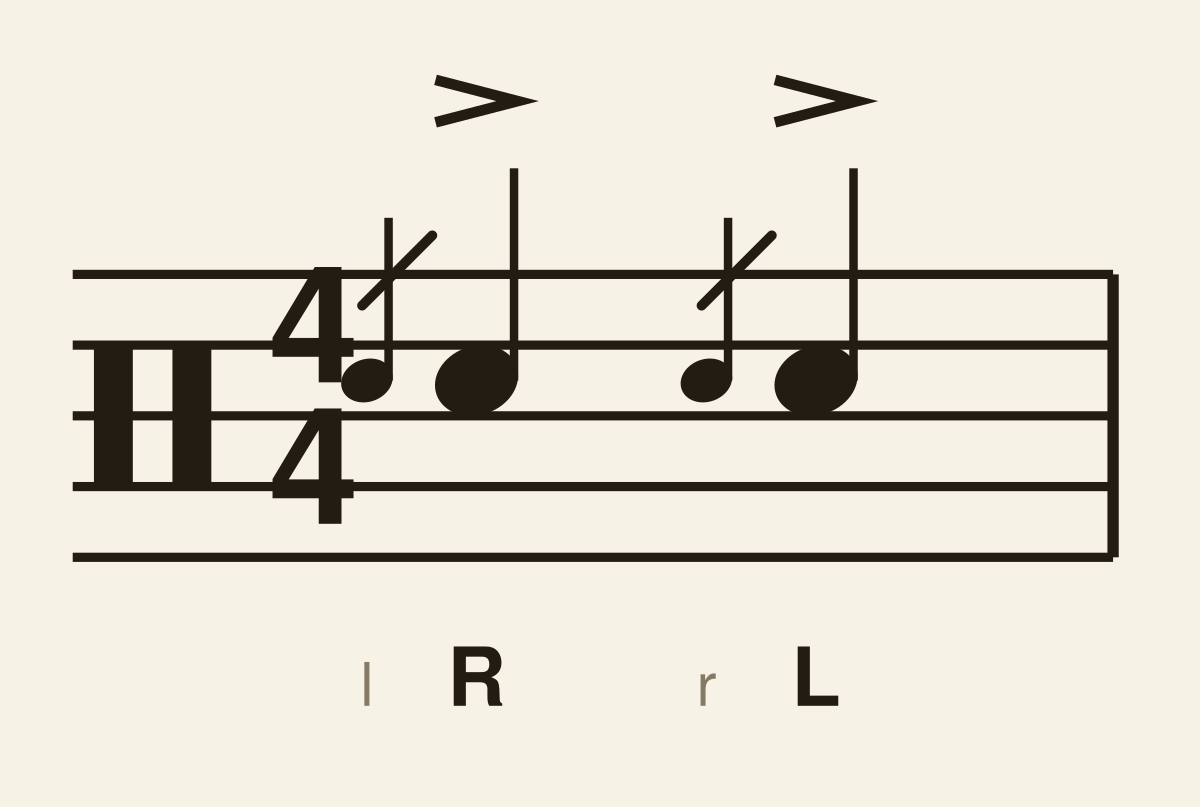
grace LR grace RL — 2 main strokes, 2 grace notes over 2 beats in eighth notes (quavers), 2 accents. Loop it from 50 BPM and build to 80.
R = right hand · L = left · small raised letters are grace notes · > = accent. The count runs along the bottom.
Next moves
What the flam is
Read it, hear it, and slow it down until it is even.
Two hands striking almost together: a quiet grace note a hair before the main stroke, so one note sounds thicker rather than two notes sounding separately. The whole trick is stick height — the grace-note hand starts about an inch off the head, the accent hand a foot above it, and both drop at the same time. If you can hear two distinct notes the grace note is too early; if you hear a single thin note both hands landed together.
How to practice it
- Set the heights before you play a note: grace-note stick about an inch off the head, accent stick about a foot above it. Then drop both hands at the same moment.
- Listen for the fault. Two clearly separate notes means the grace note came too early; one thin note means both hands landed together.
- Alternate: right-hand flam, left-hand flam, and keep the spacing identical in both directions. Most players have a good flam on one side and a sloppy one on the other.
- Play them slowly and loudly. Flams at low volume hide the timing error you are trying to find.
Where it leads
The flam belongs to the flam rudiments family, and it feeds directly into the flam tap, flam accent, flamacue, flam paradiddle and every other flam rudiment. Get it even at a slow tempo before you move on — every rudiment built on top of it inherits whatever unevenness you leave here.
Reading the notation above
Both hands play the snare drum, so every notehead sits in the third space of the staff and the sticking cells underneath tell you which hand plays which note, with the count under every stroke. Capital letters are full strokes; small raised letters are grace notes. The small noteheads with a slash through the stem are the grace notes of the ornament — they are played almost simultaneously with the note that follows, not as separate beats. The marks above the staff are accents: hit those notes harder. Full details in the drum notation guide.
Tempo ladder
Tap a rung to set the speed. Play 8 clean loops before moving up.
More flam rudiments
Questions
What is the sticking for the flam?
grace LR grace RL. R = right hand, L = left hand; the small raised letters are grace notes, played softly just before the main stroke by the other hand.
How fast should I play it?
Start slow enough that every stroke is even — around 50 BPM — then go up 4–5 BPM at a time. 80 BPM is a good first target.
How is the flam written in notation?
On the snare line: the third space of the drum staff (stave), stems up, as eighth notes (quavers), with an accent mark (>) over the loud strokes, and grace notes drawn small just before their main note. The count runs under the sticking: 1 &.
Rudiment data last updated . Every diagram here, in the printable PDF and in the chart image comes from one dataset, so the paper and the screen cannot disagree.