E♭ alto · written D6–F♯6 · top of the standard range
Alto Sax Altissimo: High F♯ and Beyond
The top of the alto saxophone’s standard range — the palm keys, the side E key and the high F♯ key — and an honest account of what happens above it. Tap any note to see the fingering and hear it.
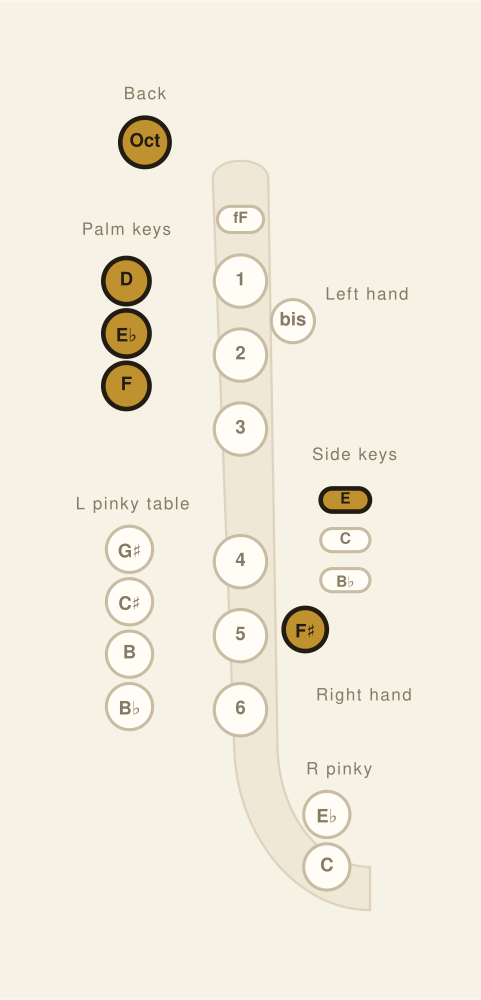
High F♯ is the high F fingering plus the high F♯ key, which is pressed by the right middle finger — get in the habit of using that finger and nothing else for it. Not every saxophone has the key: student and older horns stop at F, and on those instruments F♯6 has to be played as an altissimo note. Even with the key it runs sharp and stuffy, so drop the jaw, keep the air fast, and treat it as the last note of the standard range rather than the first note of the altissimo one.
Everything about F♯6 on alto saxophone →High-note fingerings: D6 to F♯6
Every note above C♯6 on an alto saxophone, with the concert pitch it sounds and the fingering as the diagram shows it. The same fingerings apply on tenor and baritone — only the transposition differs.
Octave 65 notes
D6
sounds F5
E♭6
sounds G♭5
E6
sounds G5
F6
sounds A♭5
F♯6
sounds A5
Pressed or coveredOpenBeginner note
| Written note | Sounds (concert) | Fingering | Alternate |
|---|---|---|---|
| High D (D6) | F5 | Octave key + Palm D key | — |
| High E♭ (E♭6) | G♭5 | Octave key + Palm D key + Palm E♭ key | — |
| High E (E6) | G5 | Octave key + Palm D key + Palm E♭ key + Side E key | Front (fork) E |
| High F (F6) | A♭5 | Octave key + Palm D key + Palm E♭ key + Palm F key + Side E key | Front (fork) F |
| High F♯ (F♯6) | A5 | Octave key + Palm D key + Palm E♭ key + Palm F key + Side E key + High F♯ key | Fork (front) F♯ |
Palm-key high notes vs true altissimo
These two things get muddled constantly, and the difference matters. The notes in the table above are keyed notes: D6 is the first palm key with the octave key, E♭6 adds the second palm key, E6 and F6 stack the third palm key and the side E key, and written F♯6 adds the high F♯ key under the right middle finger. Each has a pad of its own, and each has a fingering that works on every horn that carries the keys.
True altissimo starts above F♯6, where the keywork runs out. Those notes are overtones: you finger a lower note and use voicing — tongue position and throat shape — to make the instrument sound a higher harmonic instead of the fundamental. That is a different skill from pressing a key, and it is why this chart stops at F♯6.
Being blunt about it: we do not publish altissimo G and above, because there is no single right answer to publish. Which fork fingering speaks depends on your horn, mouthpiece, reed and voicing, and the fingering that works for your teacher may produce nothing at all on your alto. Charts that print one as standard are guessing. What is genuinely portable is the technique below.
One practical note: not every saxophone has a high F♯ key at all. Student and older horns stop at F, and on those instruments F♯6 already has to be played as an altissimo note — which is exactly why F♯ is the traditional boundary. Even with the key it runs sharp and stuffy, so drop the jaw, keep the air fast, and treat it as the last note of the standard range rather than the first note of the altissimo one.
Overtone practice is the doorway
The standard route into altissimo is overtones, and it costs nothing but patience. Finger low B♭ and, without changing the fingering, play the notes above it — the octave, then the twelfth, then higher — by moving the tongue and throat alone. Then do the same on low B and low C. Nothing else moves: same fingering, same air, different voicing.
That drill teaches the one thing altissimo actually requires, which is control of the harmonic your reed and body select. Match each overtone against the ordinary fingering for the same pitch and listen for the same tone colour; when they match, you are voicing correctly rather than forcing. Keep the jaw relaxed throughout — biting is the single most common reason altissimo attempts squeak instead of speaking, just as it is in the palm-key register.
Work in short daily sessions, and expect it to take weeks rather than an afternoon. Once overtones are steady, altissimo fingerings become what they should be: small adjustments to a voicing you already own, worth experimenting with on your own instrument.
Front F and the fork alternates
The most useful thing on this page for a player heading upward is the front F — also called the fork F. Instead of the three palm keys, you use the front-F key above the left index pearl with the left middle finger and the octave key. It is slightly less stable in tone than the palm-key F, but it is far easier in F arpeggios, it moves cleanly from C6, and it is the standard launch fingering for altissimo: most altissimo fingerings above F♯ are built on this hand shape rather than on the palm keys.
The same fork logic gives you two more alternates from the chart. Front (fork) E uses the front-F key with the left middle and ring fingers, and it is easier than the palm-key E when you are approaching from C6 or C♯6 or when the line already uses front F — though it is less stable. Fork F♯ is front F plus the high F♯ key, and it is the one to take when the line already uses front F and when you are moving on into altissimo G and above.
Learning front F as a hand shape, not as a single note, is what makes the transition to altissimo feel like a continuation of the range rather than a new instrument. A5 is worth knowing the same way, since the front-F family is built from that fingering.
Frequently asked questions
Where does alto sax altissimo actually start?
Above written F♯6. Everything up to and including F♯6 is a normal keyed note — the palm keys, the side E key and, on horns that have it, the high F♯ key. True altissimo begins where the keywork runs out: those notes are produced by overtones, using voicing and specific fork fingerings rather than a key for each pitch.
Why doesn't this page list altissimo G, A and above?
Because there is no single correct fingering to publish. Altissimo fingerings above F♯6 depend on the individual horn, mouthpiece, reed and player, and the same fingering that works on one alto will not speak on another. Printing one as though it were standard would be misleading, so this chart stops where verified fingerings stop — at F♯6 — and points you at the technique that gets you higher instead.
Does my saxophone have a high F♯ key?
Most modern intermediate and professional altos do; student horns and older instruments often stop at F. Look for a small key beside the right middle finger, above the main pearls. If your horn does not have one, written F♯6 has to be played as an altissimo note using an overtone fingering — which is exactly why F♯ is the traditional dividing line between the standard range and the altissimo.
How long does altissimo take to learn?
Longer than a fingering chart suggests, because it is a voicing skill rather than a fingering one. Overtone practice on low B♭ and low B is the standard route in, and it usually takes weeks of short daily work before the first altissimo note appears reliably. That is normal — the fingerings are the last five per cent of the problem.
Alto sax fingering data last updated . Every diagram here, in the printable PDF and in the chart image comes from one dataset, so the paper and the screen cannot disagree.