Low D on the Alto Saxophone
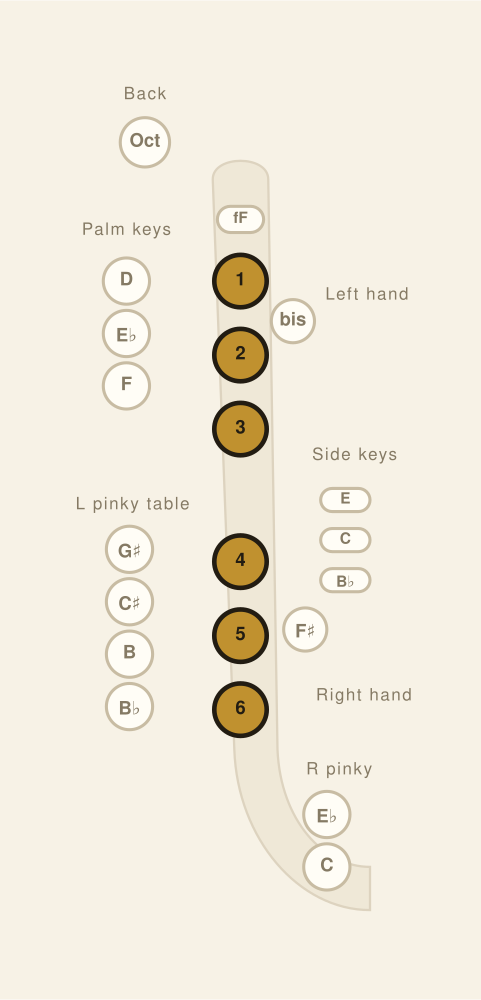
To play Low D (D4) on alto sax: Left hand: 1, 2, 3 · Right hand: 4, 5, 6.
Play along: hear the note for 2 beats, then you play it for 2.
- Left index key
- Left middle key
- Left ring key
- Right index key
- Right middle key
- Right ring key
Low D is the classic diagnostic note: blow warm, steady air with a relaxed jaw and it centers immediately, while biting or over-blowing makes it spread, honk, or leap up an octave. If low D speaks easily, everything below it is a pinky key away.
Low D is the classic diagnostic note: blow warm, steady air with a relaxed jaw and it centers immediately, while biting or over-blowing makes it spread, honk, or leap up an octave. If low D speaks easily, everything below it is a pinky key away.
Sound and display
Next moves
Teaching a class? Class mode keeps Stand mode and Test me on the notes your class is learning.
More for advanced players
Written and sounding pitch, and how the note works
About this note
Low D is written D4 and sounds concert F3.
All six fingers and no pinky keys at all — the reference fingering the entire low register is built from, sounding concert F below the staff. Low D is the classic diagnostic note: blow warm, steady air with a relaxed jaw and it centers immediately, while biting or over-blowing makes it spread, honk, or leap up an octave. If low D speaks easily, everything below it is a pinky key away.
- Primary fingering: Left index key + Left middle key + Left ring key + Right index key + Right middle key + Right ring key
- Written pitch: D4 · Concert pitch: F3
- Sounding frequency: 174.61 Hz
What to press, key by key
- Left index key
- Left middle key
- Left ring key
- Right index key
- Right middle key
- Right ring key
Questions
How do you play Low D on alto sax?
To play Low D (D4) on alto sax: Left hand: 1, 2, 3 · Right hand: 4, 5, 6. Low D is written D4 and sounds concert F3. Press: Left index key, Left middle key, Left ring key, Right index key, Right middle key, Right ring key.
Is Low D written or concert pitch?
The name on this page is the written note you read. On E♭ alto sax it sounds concert F3.
Alto Saxophone fingering data last updated . Every diagram here, in the printable PDF and in the chart image comes from one dataset, so the paper and the screen cannot disagree.