High C on the B♭ Trumpet
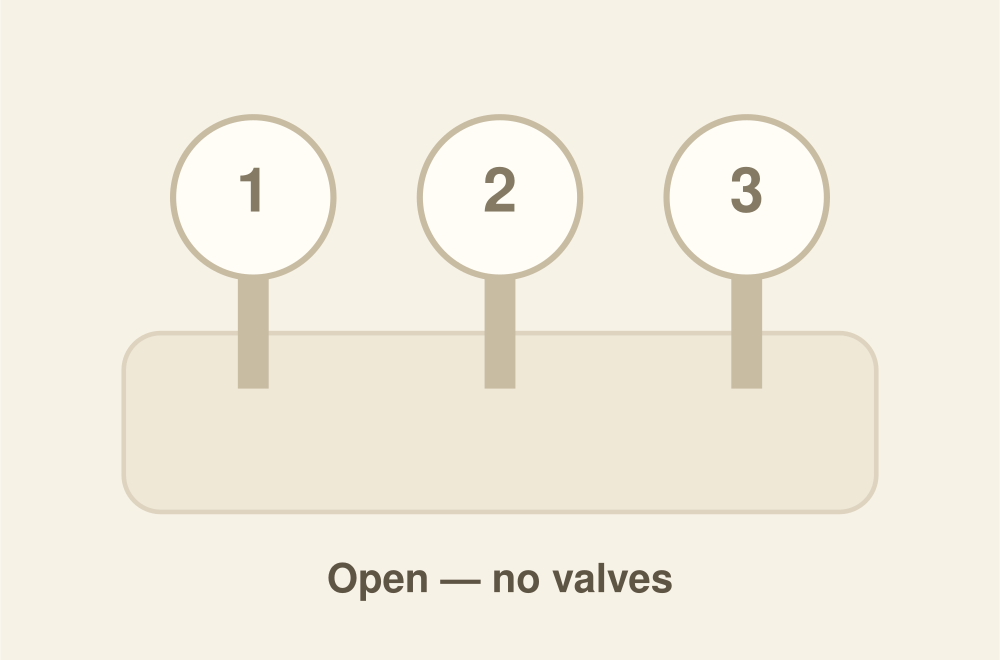
To play High C (C6) on trumpet, press no valves: play it open.
What’s a partial?
With the same valves down your lips can buzz several notes. Each one is a partial, counted from the lowest. High C is the 8th.
Play along: hear the note for 2 beats, then you play it for 2.
No valves, like your low C, but much higher. Use faster air, not a harder push: keep the corners of your mouth firm, don't press the mouthpiece into your lips, and hear the note in your head before you play. A little every day, with lots of rests, gets you there.
No valves, like your low C, but much higher. Use faster air, not a harder push: keep the corners of your mouth firm, don't press the mouthpiece into your lips, and hear the note in your head before you play. A little every day, with lots of rests, gets you there.
Sound and display
Next moves
Teaching a class? Class mode keeps Stand mode and Test me on the notes your class is learning.
Same fingering, different note
Your lips choose between these notes: the fingering stays the same.
More for advanced players
Why high C is hard · How to build up to it · When it will not come out
About this note
High C is written C6 and sounds concert B♭5. It is the 8th partial.
Open horn on the 8th partial — the same no-valve fingering as C4, G4, C5, E5 and G5, two octaves above low C, and written high C sounds concert Bb5. Getting it is a matter of air speed, aperture and hearing the slot, never pressure: with no valves down there is nothing for the fingers to contribute.
- Primary fingering: Open (no valves)
- Written pitch: C6 · Concert pitch: B♭5
- Sounding frequency: 932.33 Hz
- Harmonic partial: 8: the valves set the tube length, but your air and embouchure (the shape of your lips) select the partial.
Why high C is hard
High C is the 8th partial of the open horn — the same no-valve tube as low C, four slots higher. Up here the usable partials are only a step apart: G5 sits on the 6th, the 7th is too flat to use, and C6 sits on the 8th. The lips have to find a much narrower target than they do in the staff, which is why the note cracks to G5 or splits even when the fingering is right.
It is also the top of most school trumpet parts. Players reach it when the air is fast and the aperture small and steady — not when the mouthpiece is pressed harder. Pressure works for a note or two and then takes the endurance for the rest of the rehearsal.
How to build up to it
Lip slurs on the open horn are the most direct practice: C4–G4–C5–E5–G5 and back, slowly, then add C6 at the top only when G5 is relaxed and centered. Because no valves move, every change comes from the air and the aperture, which is exactly the skill high C needs.
Play the top of the slur softly. Loud playing opens the aperture and drops the note; soft playing with fast, supported air keeps it small. Many teachers use vowel shapes to help — an “ah” for low notes moving towards an “ee” as you go up, which arches the tongue and speeds the air without extra pressure.
Rest as much as you play. Short sets of slurs with rests in between build range faster than long sessions that end with tired, pressed lips.
When it will not come out
If you get G5 instead, the air is not fast enough or the aperture has opened; if you get a thin squeak above it, you are pinching. If the sound stops altogether, the mouthpiece is usually pressed so hard the lips cannot vibrate — back off the pressure and play it softer.
Approach it from the note below by slurring rather than tonguing high C cold. G5 to C6 on the open horn, or A5 (1-2) up to C6, lets you feel the slot before you have to start on it.
Questions
How do you play High C on trumpet?
To play High C (C6) on trumpet, press no valves: play it open. High C is written C6 and sounds concert B♭5. It is the 8th partial.
Is High C written or concert pitch?
The name on this page is the written note you read. On B♭ trumpet it sounds concert B♭5.
B♭ Trumpet fingering data last updated . Every diagram here, in the printable PDF and in the chart image comes from one dataset, so the paper and the screen cannot disagree.