B♭1 on the BB♭ Tuba
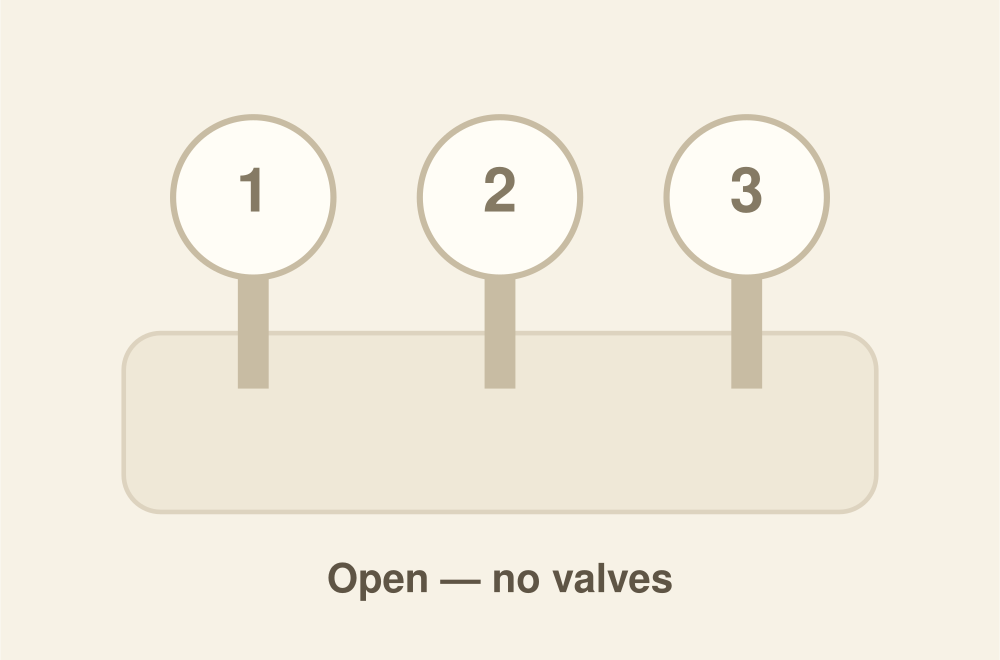
To play B♭1 on tuba, press no valves: play it open.
What’s a partial?
With the same valves down your lips can buzz several notes. Each one is a partial, counted from the lowest. B♭1 is the 2nd.
Play along: hear the note for 2 beats, then you play it for 2.
No valves: this open B♭ is the band's tuning note. Take a big, relaxed breath, let your lips buzz loosely and blow slow, warm air. If it sounds pinched, drop your jaw a little.
No valves: this open B♭ is the band's tuning note. Take a big, relaxed breath, let your lips buzz loosely and blow slow, warm air. If it sounds pinched, drop your jaw a little.
Sound and display
Next moves
Teaching a class? Class mode keeps Stand mode and Test me on the notes your class is learning.
Same fingering, different note
Your lips choose between these notes: the fingering stays the same.
More for advanced players
Written and sounding pitch, and how the note works
About this note
B♭1 sounds B♭1 (the tuba reads at concert pitch). It is on the 2nd partial.
Open horn on the 2nd partial — the tuba's home note and the anchor of the low register. Every note from E1 to A1 is this same slot lengthened by valves. Below it lies the pedal B♭0, the fundamental, which needs a huge, relaxed aperture.
- Primary fingering: Open (no valves)
- Written pitch: B♭1
- Sounding frequency: 58.27 Hz
- Harmonic partial: 2: the valves set the tube length, but your air and embouchure (the shape of your lips) select the partial.
Questions
How do you play B♭1 on tuba?
To play B♭1 on tuba, press no valves: play it open. B♭1 sounds B♭1 (the tuba reads at concert pitch). It is on the 2nd partial.
Is B♭1 written or concert pitch?
The name on this page is the written note you read. It sounds B♭1.
BB♭ Tuba fingering data last updated . Every diagram here, in the printable PDF and in the chart image comes from one dataset, so the paper and the screen cannot disagree.